File type: Proposal: PDF or Word doc / Self-assessment: Word doc / Audio: MP3, M4A, or WAV file, 24 bit, 44.1 kHz / Video: MOV or M4V 1920x1080px (horizontal), 24fps / Images: JPG, at least 1920px at the longest dimension
This is a chance to synthesize all of what you have learned this semester—conceptually and technically—and push yourself further to create a culminating project.
Brief
You will create a self-directed final project that fits within the category of new genre. This can be purely a work of sound art, performance art, video art, or installation art, or a hybrid. The scope should be commensurate with that of a final project and the time given to work on the project.
You are required to submit a brief written proposal (150–300 words) that outlines your central concept and how the execution grows from the concept. This may be submitted as a Word doc or PDF on Learning Suite. You will review this proposal with the instructor during a one-on-one meeting.
The project must be viewable by the class at the critique, so it should be installed in the project space or nearby, or viewable on the classroom TV, or provided as a sound file that everyone may listen to. Time-based works should be able to be experienced at the critique as a piece no longer than five minutes, even if the entire work is longer. Documentation of the work should be no longer than ten minutes.
Coordinate with the instructor on reserving room in the project space if you intend to install your work there. This is allotted on a first-come-first-served basis, so do not delay.
The work should be appropriately documented in photo and/or video, and the documentation submitted on Learning Suite before the final critique. Documentation should be of a high level, thoughtful, and appropriate to the project. For example, a sound installation should be documented with at least video if not both video and photography to capture the sound and the visuals. A video project can just be submitted as a video file, but a video installation, should have documentation of the installation and not just the video. If you have questions, please reach out to the instructor.
You are also required to submit a self-evaluation along with your assignment, so leave enough time to complete the assignment and ruminate on your experience. 10% of your grade is based on your Assessment/Critique—this includes your self-assessment and participating fully in the group critique.
The project space must be returned to its original condition if not better by 7am the day after the final. If the space is not returned to its original condition, including any trash left behind, you will lose 5 points per day until the space is restored. After two days, you will receive a failing grade on the final.
Submission Checklist
Tips and Considerations
Consider the time given for you to plan, execute, and document the project and come up with something appropriate and ambitious.
Ask yourself what you are hoping to accomplish with this project.
Set a production schedule for yourself to account for testing, trouble-shooting, installing, and documenting.
If you are involving anything that has a level of unpredictability to it, test it in the manner it will be used in real life. If you have video, set it up to run over a long period of time to make sure the screen does not go to sleep, that the video loops as expected, and that the sound works. Never assume that things will work exactly as you expect them to in your head.
In installing work, take into account how your project will be lit. Should it be in a darkened space? Does it require a spotlight or two? What about colored lights?
If you are planning an outdoor project, keep in mind that the weather may not cooperate and may be antagonistic to you and/or your material.
Confer with the instructor before beginning your project to discern what possibilities and pitfalls there may be.
Consider the ethics of your interactions.
Experiment! Ask yourself “what if” questions and try out those ideas with quick prototypes. Don’t make the first time you try out the ideas be for the final production.
Own your decisions. Don’t just make decisions based on convenience or laziness. Make choices that are informative for the piece.
Use the instructor! Ask questions. Seek input. Brainstorm with them.
Floor Plan
Grading
Assignment grades will be based on the following:
Conceptual Concerns (40%)
Student demonstrates evidence that they understand and inventively integrate conceptual concerns and implications of new genres.
Excellent: Student demonstrates conversational familiarity with the material—making interesting connections between ideas, readings, and presentations.
Average: Student is able to recall and recite material, but not do anything interesting with it.
Below Average: Student struggles to demonstrate a grasp of the material and shows no facility in connecting ideas or new thinking.
Execution (40%)
When executing a project, the student demonstrates a firm grasp of the materials, techniques, hardware, and software. The student’s skills and approach are appropriate to their concept. In written/oral assignments, this includes proper spelling, punctuation, sentence structure, grammar and formatting for written assignments; and annunciation, confidence and focused arguments for oral assignments.
Excellent: Student displays skills and sensitivity when creating projects. The level of craft and approach to making is appropriate to the concept. In written/oral assignments, student understands writing and presentation modes including style guides and oral confidence and is able to nimbly employ these tools in their art projects, writing, and speaking.
Average: Student work shows some flaws in their understanding of materials and skills. Stylistic and formatting mistakes are present.
Below Average: The execution is unconsidered and hasty. Student repeatedly makes the same mistakes and ignores instructor input and suggestions.
Assessment/Critique (10%)
The student will produce a self-evaluation for each art project including the strengths and weaknesses of a given work and plans for future improvement. This will also include an accounting of time taken. The student will also be present for and participate in group critiques of projects.
Excellent: The student thoughtfully and honestly engages in the self-reflective process of critiquing their own work and efforts. The student enthusiastically engages with group critiques, seeking ways to offer constructive feedback to other students.
Average: The student performs a cursory and surface-level assessment of their work and efforts. They make neutral comments during the group critiques and do not fully engage.
Below Average: The student demonstrates an inability to honestly engage with their work as it exists in the world, and does not adequately participate in group critiques, or is absent/tardy.
Following Instructions (10%)
The student adheres to the guidelines provided for the course and the assignment. If the paper has a particular framework, the student adheres to that framework. If an assignment is to be submitted as a Word doc on Learning Suite, the student does not email the instructor a PDF.
Excellent: A detail-oriented student who takes instruction and fastidiously executes it within their work.
Average: A student who misses some details because they didn’t read instructions thoroughly or take proper notes when instructions were given.
Below Average: Student ignores basic instructions and guidance given for assignments.
On-time Submission
No late work is accepted except in case of illness or family death.
Learning Outcomes Addressed
Non-Traditional Approaches
Students will expand their art practice by engaging in a variety of non-traditional approaches to art production, while incorporating a conceptual framework in their exploration.
New Genre Art Practices
Students will develop a basic understanding of New Genre art practices and their origins, including relevant themes and concerns.
Production
Students will produce a body of work demonstrating a comprehension and engagement with the themes and concepts explored in class.
Detail: Complete a student rating for the course by the deadline.
Submit via: Learning Suite
Brief
To help better the class, I ask that you complete a student rating form. Be fair and honest to help me and the course improve. Knowing what works well in the class, as well as what needs adjustment is important to retain what is effective, and alter what needs fine tuning. I appreciate the input.
This assignment cannot be completed late since I have no control over the availability of the student rating form.
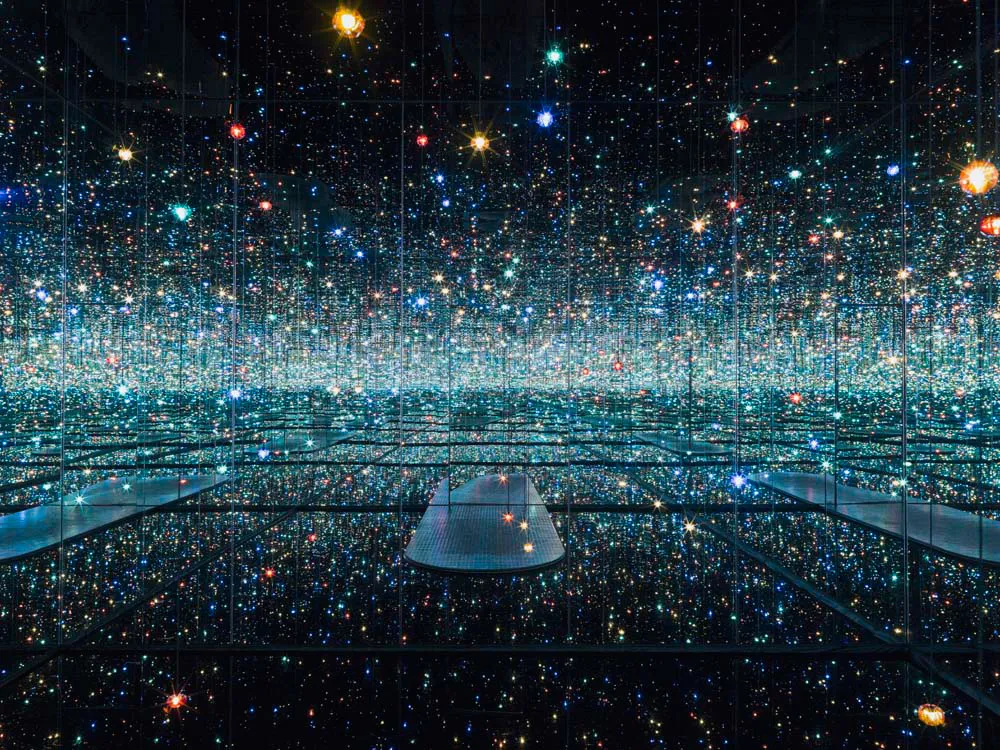
Yayoi Kusama (1929–), Infinity Mirrored Room-The Souls of Millions of Light Years Away, 2013
Due: Thu Nov 20, 8am
Detail: Create an instance of installation art somewhere on west campus
Submit via: Learning Suite + in class
File type: Self-evaluation: Word doc / Documentation:
Why?
Installation art evolved out of Dadaist and Constructivist forays into more immersive experiences. As they questioned the boundaries of art, they poked and prodded their way from mere three-dimensional objects, to three-dimensional space, time, and the viewer’s presence in the space as part of the artwork. Installation art often invites viewers to move through space, look around, and sometimes interact with the work or each other. Installation art can be a gesamtkunstwerk, or a “total work of art,” meaning that it involves most or all of the senses with things to see, touch, hear, and even smell and taste. The mediums of installation art are innumerable and can involve traditional material like clay or be high-tech immersive extravaganzas. Learning how to think about space, time, and audience movement/interaction can be liberating and rewarding.
Brief
You will create an instance of installation art somewhere on west campus. This can be in the project spaces, a locker, the courtyard, or anywhere (that is not disruptive or dangerous). Anything outside of the Project Space or a locker, you will need to seek approval and be aware that they may be more restrictive about what you can do. The scale of the installation is up to you, but it must encourage the audience to move through/around the work (i.e., it cannot just be a single sculpture in a space). The work should be conceptually grounded.
You will present the installation in class on the due date at which point the work should be complete and whole. If there are electronic components such as sound or video that are part of your piece, they should already be up and running before the beginning of class. You are responsible for checking out and installing the equipment. All spaces will need to be returned to their original state by the end of the due day. Failure to do so will result in a reduced grade.
You are also required to submit a self-evaluation along with your assignment, so leave enough time to complete the assignment and ruminate on your experience. 10% of your grade is based on your Assessment/Critique—this includes your self-assessment and participating fully in the group critique.
Oversized files should be uploaded to a cloud service like Google Drive, Box, Dropbox, or similar and the link shared on Learning Suite. The file should not be password protected and the student should test the link in an incognito/private browser window to make sure anyone can access it with the link before submitting it.
Submission Checklist
Tips and Considerations
Consider the time given for you to plan, execute, and document the project and come up with something appropriate and ambitious.
Ask yourself what you are hoping to accomplish with this project.
Set a production schedule for yourself to account for testing, trouble-shooting, installing, and documenting.
If you are involving anything that has a level of unpredictability to it, test it in the manner it will be used in real life. If you have video, set it up to run over a long period of time to make sure the screen does not go to sleep, that the video loops as expected, and that the sound works. Never assume that things will work exactly as you expect them to in your head.
Take into account how your work will be lit. Should it be in a darkened space? Does it require a spotlight or two? What about colored lights?
If you are planning and outdoor project, keep in mind that the weather may not cooperate and may be antagonistic to you and/or your material.
Confer with the instructor before beginning your project to discern what possibilities and pitfalls there may be.
Consider the ethics of your interactions.
Experiment! Ask yourself “what if” questions and try out those ideas with quick prototypes. Don’t make the first time you try out the ideas be for the final production.
Own your decisions. Don’t just make decisions based on convenience or laziness. Make choices that are informative for the piece.
Use the instructor! Ask questions. Seek input. Brainstorm with them.
Grading
Assignment grades will be based on the following:
Conceptual Concerns (40%)
Student demonstrates evidence that they understand and inventively integrate conceptual concerns and implications of new genres.
Excellent: Student demonstrates conversational familiarity with the material—making interesting connections between ideas, readings, and presentations.
Average: Student is able to recall and recite material, but not do anything interesting with it.
Below Average: Student struggles to demonstrate a grasp of the material and shows no facility in connecting ideas or new thinking.
Execution (40%)
When executing a project, the student demonstrates a firm grasp of the materials, techniques, hardware, and software. The student’s skills and approach are appropriate to their concept. In written/oral assignments, this includes proper spelling, punctuation, sentence structure, grammar and formatting for written assignments; and annunciation, confidence and focused arguments for oral assignments.
Excellent: Student displays skills and sensitivity when creating projects. The level of craft and approach to making is appropriate to the concept. In written/oral assignments, student understands writing and presentation modes including style guides and oral confidence and is able to nimbly employ these tools in their art projects, writing, and speaking.
Average: Student work shows some flaws in their understanding of materials and skills. Stylistic and formatting mistakes are present.
Below Average: The execution is unconsidered and hasty. Student repeatedly makes the same mistakes and ignores instructor input and suggestions.
Assessment/Critique (10%)
The student will produce a self-evaluation for each art project including the strengths and weaknesses of a given work and plans for future improvement. This will also include an accounting of time taken. The student will also be present for and participate in group critiques of projects.
Excellent: The student thoughtfully and honestly engages in the self-reflective process of critiquing their own work and efforts. The student enthusiastically engages with group critiques, seeking ways to offer constructive feedback to other students.
Average: The student performs a cursory and surface-level assessment of their work and efforts. They make neutral comments during the group critiques and do not fully engage.
Below Average: The student demonstrates an inability to honestly engage with their work as it exists in the world, and does not adequately participate in group critiques, or is absent/tardy.
Following Instructions (10%)
The student adheres to the guidelines provided for the course and the assignment. If the paper has a particular framework, the student adheres to that framework. If an assignment is to be submitted as a Word doc on Learning Suite, the student does not email the instructor a PDF.
Excellent: A detail-oriented student who takes instruction and fastidiously executes it within their work.
Average: A student who misses some details because they didn’t read instructions thoroughly or take proper notes when instructions were given.
Below Average: Student ignores basic instructions and guidance given for assignments.
On-time Submission
Projects lose 5 points (our of 100) per 24-hour period they are late. If an assignment is submitted 5 minutes late, that is within the first 24-hour period, so it loses 5 points. If it is 27 hours late, that puts it in the second 24-hour perdiod, so it loses 10 points. If the assignment is submitted or conducted during class, and you are late to class, you will lose 5 points.
Learning Outcomes Addressed
Non-Traditional Approaches
Students will expand their art practice by engaging in a variety of non-traditional approaches to art production, while incorporating a conceptual framework in their exploration.
New Genre Art Practices
Students will develop a basic understanding of New Genre art practices and their origins, including relevant themes and concerns.
Production
Students will produce a body of work demonstrating a comprehension and engagement with the themes and concepts explored in class.
Detail: Plan, execute, and produce a 3–5-minute video art piece.
Submit via: Learning Suite + in class
File type: Video: MOV or M4V 1920x1080px (horizontal), 24fps, 3–10 minutes, no larger than 750MB / Self-evaluation: Word doc
Why?
Video art is probably the most prevalent form of time-based art currently in use. Due to our ability to easily shoot and share videos given the prevalence of camera phones and video-sharing sites. As you can imagine, this was a little more difficult even just 20 years, and even then, digital/online video was still very low resolution. This is also a flexible form that can include standard video, animation, sound, photography, and more. It is also easily transportable, making it a great medium for young artists trying to get their work out into the world—you don’t have to pay framing and shipping costs.
Brief
You will produce a 3–5-minute video art piece that is conceptually grounded. It would be great if this can be an extension of your standard practice and themes, but you can also use this as a chance to experiment and branch out. Think creatively about how video might be produced according to your central concept. There is standard video, but also animation, screen recording, video collage (check copyright laws), a video slideshow, video games, and more.
You will present the video in class and submit the video via Learning Suite (upload or include a link to where the video is housed online—Box, Dropbox, Google Drive, YouTube, Vimeo).
You are also required to submit a self-evaluation along with your assignment, so leave enough time to complete the assignment and ruminate on your experience. 10% of your grade is based on your Assessment/Critique—this includes your self-assessment and participating fully in the group critique.
Oversized files should be uploaded to a cloud service like Google Drive, Box, Dropbox, or similar and the link shared on Learning Suite. The file should not be password protected and the student should test the link in an incognito/private browser window to make sure anyone can access it with the link before submitting it.
Submission Checklist
Tips and Considerations
Consider the time given for you to plan, execute, and document the project and come up with something appropriate and ambitious.
Ask yourself what you are hoping to accomplish with this project.
Set a production schedule for yourself to account for shooting video, organizing footage, editing it, and mixing the sound (if there is any).
Think critically before including any music in your video piece. This is a standard of Hollywood productions, but is often just to fill space. Only include music if the piece calls for it, and even then, you need to have the rights to use it in your video.
When engaging with people, consider where will be the best place to go, permissions you may need to be and film there, and what methods you will use to invite them to participate.
Consider the ethics of your interactions.
If people’s faces will be visible in the video, you will want them to sign a release form that you keep on file.
If your body is in the piece, you are performing, so what will that look like? Consider how you will be in the space and how much of a performance it will be or if it be more natural and unaffected. Will you be wearing a “costume?”
How will you capture the video and the sound? Do you need to have multiple cameras and/or microphones?
If your file is too large to upload to Learning Suite, put it on a cloud service and upload a link to that file on Learning Suite.
Experiment! Ask yourself “what if” questions and try out those ideas with quick prototypes. Don’t make the first time you try out the ideas be for the final production you are documenting.
Own your decisions. Don’t just make decisions based on convenience or laziness. Make choices that are informative for the piece.
Use the instructor! Ask questions. Seek input. Brainstorm with them.
Equipment
Be mindful of the equipment you use, the requisite storage cards, and types of inputs to accommodate different microphones or devices.
“Learn how to compress videos without losing quality in just 1 minute! Discover three powerful methods including a free software, an online tool, and a fast, full-featured converter to reduce file size while keeping your footage sharp and smooth.
Perfect for YouTubers, content creators, and anyone who needs smaller videos for faster uploads and sharing. Try these easy, step-by-step tips today and save storage space without sacrificing quality!”
“Join Content Creator Motoki as he shows you his favorite tips and tricks for mastering the green screen. Ever heard of a blue screen? In this video, he'll show you when you might want to consider using a blue screen instead of a green screen, and how to edit your awesome effects in PremierePro.”
“This is a short video detailing the basics of I-Frame Datamoshing.”
Grading
Assignment grades will be based on the following:
Conceptual Concerns (40%)
Student demonstrates evidence that they understand and inventively integrate conceptual concerns and implications of new genres.
Excellent: Student demonstrates conversational familiarity with the material—making interesting connections between ideas, readings, and presentations.
Average: Student is able to recall and recite material, but not do anything interesting with it.
Below Average: Student struggles to demonstrate a grasp of the material and shows no facility in connecting ideas or new thinking.
Execution (40%)
When executing a project, the student demonstrates a firm grasp of the materials, techniques, hardware, and software. The student’s skills and approach are appropriate to their concept. In written/oral assignments, this includes proper spelling, punctuation, sentence structure, grammar and formatting for written assignments; and annunciation, confidence and focused arguments for oral assignments.
Excellent: Student displays skills and sensitivity when creating projects. The level of craft and approach to making is appropriate to the concept. In written/oral assignments, student understands writing and presentation modes including style guides and oral confidence and is able to nimbly employ these tools in their art projects, writing, and speaking.
Average: Student work shows some flaws in their understanding of materials and skills. Stylistic and formatting mistakes are present.
Below Average: The execution is unconsidered and hasty. Student repeatedly makes the same mistakes and ignores instructor input and suggestions.
Assessment/Critique (10%)
The student will produce a self-evaluation for each art project including the strengths and weaknesses of a given work and plans for future improvement. This will also include an accounting of time taken. The student will also be present for and participate in group critiques of projects.
Excellent: The student thoughtfully and honestly engages in the self-reflective process of critiquing their own work and efforts. The student enthusiastically engages with group critiques, seeking ways to offer constructive feedback to other students.
Average: The student performs a cursory and surface-level assessment of their work and efforts. They make neutral comments during the group critiques and do not fully engage.
Below Average: The student demonstrates an inability to honestly engage with their work as it exists in the world, and does not adequately participate in group critiques, or is absent/tardy.
Following Instructions (10%)
The student adheres to the guidelines provided for the course and the assignment. If the paper has a particular framework, the student adheres to that framework. If an assignment is to be submitted as a Word doc on Learning Suite, the student does not email the instructor a PDF.
Excellent: A detail-oriented student who takes instruction and fastidiously executes it within their work.
Average: A student who misses some details because they didn’t read instructions thoroughly or take proper notes when instructions were given.
Below Average: Student ignores basic instructions and guidance given for assignments.
On-time Submission
Projects lose 5 points (our of 100) per 24-hour period they are late. If an assignment is submitted 5 minutes late, that is within the first 24-hour period, so it loses 5 points. If it is 27 hours late, that puts it in the second 24-hour perdiod, so it loses 10 points. If the assignment is submitted or conducted during class, and you are late to class, you will lose 5 points.
Learning Outcomes Addressed
Non-Traditional Approaches
Students will expand their art practice by engaging in a variety of non-traditional approaches to art production, while incorporating a conceptual framework in their exploration.
New Genre Art Practices
Students will develop a basic understanding of New Genre art practices and their origins, including relevant themes and concerns.
Production
Students will produce a body of work demonstrating a comprehension and engagement with the themes and concepts explored in class.
Performance art is one of the primary time-based genres—rooted in experimental theater, dance, and musical performances. Performance is centered on the human body, but is not relegated to just the artist’s body. Experiencing performance as an artist/performer, audience member, and participant is important to understand and appreciate the genre.
Brief
Your performance project will consist of two parts:
The live, real-time performance:
The live performance should be three to five minutes and will be conducted in front of the class in the project space. Keep that space in mind. If you need a different space or set up, such as conducting the performance outdoors, consult with the instructor well in advance. If the concept for your performance dictates that the action should take longer than three to five minutes, you may consider the in-class performance to be an excerpt and should be treated as such. Your performance may be collaborative, participatory, and/or directed. If participatory or directed, the instructions and instruction period should be part of the three to five minutes given in class.
A documentation of a performance:
You should have also conducted the performance prior to class and video-documented it. Think carefully about the mode of documentation and how that informs the performance. The video should be three to ten minutes in total, even if the actual performance is longer. Be mindful of equipment and set-up you might need in order to appropriately document the performance so that the document is not merely an afterthought or hastily assembled. Consider capturing multiple camera angles. Consider capturing the sound separately from the video camera for higher-quality.
Oversized files should be uploaded to a cloud service like Google Drive, Box, Dropbox, or similar and the link shared on Learning Suite. The file should not be password protected and the student should test the link in an incognito/private browser window to make sure anyone can access it with the link before submitting it.
Your project should be conceptually grounded, with that central concept informing how the performance is executed. Try to consider the work you are already do and dedicating yourself to. See if there is a way to formulate a performance that is in line with your existing practice so that it might become part of a larger body of work and portfolio. If you want this to be a true experiment and move away from your current body of work, that is also fine and is entirely your choice.
Submission Checklist
Tips and Considerations
Have a central concept that is grounding and informing your work.
Decisions should be made in the interest of the work and not just out of convenience. Performance is immersive, so you should consider everything within your control.
What kind of lighting do you want for both the documentation and the performance? Will the lighting change during the course of the performance?
Will there be sound components generated by the performer(s)? How might you document those? Should the sounds be amplified in the space, and if so, how will you capture and broadcast those sounds?
Should the audience be sitting or standing? Should they be arranged in a circle around the performer, grouped together facing the performer, or in a semi-circle? What is the optimal viewing position/distance?
If you are planning a performance piece that involves you as the central figure, consider what you are wearing, how you move, what is in the space, lighting, etc.
Is this more theatrical—borrowing tropes from the theatre—or more guerrilla-style?
If you are planning a participatory/collaborative performance, how is the instruction part of the performance and equally considered? What parameters will you set up and how much freedom are you allowing the participants? What will you do if participants transgress the rules, or participate in a way you had not considered?
Consider the ethics of your interactions.
If people’s faces will be visible in the video, you will want them to sign a release form that you keep on file.
Consider the amount of time you are given to work on the project. It is expected that you make full use of that time to realize a complex and deeply involved project.
Budget 5–10% of your time as slush in case of emergencies, technological glitches, etc.
Consider what equipment you may need to check out from the stockroom in advance. Remember tech checkout is first-come-first-served, so you may want to reserve equipment in advance and do not wait until the last minute when everyone else is checking out equipment for final exhibitions and final projects.
How will you document this performance? What equipment will you need? What lighting conditions will you require? Do you need to check out lights?
Will the document require multiple camera angles, editing, collecting sound from a source other than the camera, specific weather conditions, etc.?
Equipment
Be mindful of the equipment you use, the requisite storage cards, and types of inputs to accommodate different microphones or devices.
Late Policy
The live performance cannot be submitted late except in case of illness or family death. The documentation and self-assessment may be submitted late at a penalty of 5 points per day. If you are late to the final critique, you will lose 5 points.
“Learn how to compress videos without losing quality in just 1 minute! Discover three powerful methods including a free software, an online tool, and a fast, full-featured converter to reduce file size while keeping your footage sharp and smooth.
Perfect for YouTubers, content creators, and anyone who needs smaller videos for faster uploads and sharing. Try these easy, step-by-step tips today and save storage space without sacrificing quality!”
Grading
Assignment grades will be based on the following:
Conceptual Concerns (40%)
Student demonstrates evidence that they understand and inventively integrate conceptual concerns and implications of new genres.
Excellent: Student demonstrates conversational familiarity with the material—making interesting connections between ideas, readings, and presentations.
Average: Student is able to recall and recite material, but not do anything interesting with it.
Below Average: Student struggles to demonstrate a grasp of the material and shows no facility in connecting ideas or new thinking.
Execution (40%)
When executing a project, the student demonstrates a firm grasp of the materials, techniques, hardware, and software. The student’s skills and approach are appropriate to their concept. In written/oral assignments, this includes proper spelling, punctuation, sentence structure, grammar and formatting for written assignments; and annunciation, confidence and focused arguments for oral assignments.
Excellent: Student displays skills and sensitivity when creating projects. The level of craft and approach to making is appropriate to the concept. In written/oral assignments, student understands writing and presentation modes including style guides and oral confidence and is able to nimbly employ these tools in their art projects, writing, and speaking.
Average: Student work shows some flaws in their understanding of materials and skills. Stylistic and formatting mistakes are present.
Below Average: The execution is unconsidered and hasty. Student repeatedly makes the same mistakes and ignores instructor input and suggestions.
Assessment/Critique (10%)
The student will produce a self-evaluation for each art project including the strengths and weaknesses of a given work and plans for future improvement. This will also include an accounting of time taken. The student will also be present for and participate in group critiques of projects.
Excellent: The student thoughtfully and honestly engages in the self-reflective process of critiquing their own work and efforts. The student enthusiastically engages with group critiques, seeking ways to offer constructive feedback to other students.
Average: The student performs a cursory and surface-level assessment of their work and efforts. They make neutral comments during the group critiques and do not fully engage.
Below Average: The student demonstrates an inability to honestly engage with their work as it exists in the world, and does not adequately participate in group critiques, or is absent/tardy.
Following Instructions (10%)
The student adheres to the guidelines provided for the course and the assignment. If the paper has a particular framework, the student adheres to that framework. If an assignment is to be submitted as a Word doc on Learning Suite, the student does not email the instructor a PDF.
Excellent: A detail-oriented student who takes instruction and fastidiously executes it within their work.
Average: A student who misses some details because they didn’t read instructions thoroughly or take proper notes when instructions were given.
Below Average: Student ignores basic instructions and guidance given for assignments.
Learning Outcomes Addressed
Non-Traditional Approaches
Students will expand their art practice by engaging in a variety of non-traditional approaches to art production, while incorporating a conceptual framework in their exploration.
New Genre Art Practices
Students will develop a basic understanding of New Genre art practices and their origins, including relevant themes and concerns.
Production
Students will produce a body of work demonstrating a comprehension and engagement with the themes and concepts explored in class.
This assignment is designed to better familiarize you with recording and editing technology and methods, and to further hone your listening skills.
Brief
You will create a one- to three-minute non-musical soundscape to be listened to on headphones using collected and/or generated sounds. This soundscape should loop seamlessly, meaning that the end of the track should perfectly align with the beginning. This soundscape should take full advantage of and explore the stereo field and the frequency range. You will be required to employ at least two prompts (total) from the strategies and methodologies addressed in class: Unstuck, Richard Serra’s Verb List, or Schmidt and Eno’s Oblique Strategies. Describe within your self evaluation which methodologies you used. Also be mindful of the Vocal Viewpoints exercise we did in class as you manipulate and edit your sounds: Tempo, Duration, Repetition, Shape, Gesture, Pitch, Dynamic, Timbre, Silence, Kinesthetic Response
Build your work around a concept. Maybe your concept is documenting a particular space or event. Maybe you are interested in family history, so you collect sounds related to family voices, music, activities, and gatherings. Perhaps you want to think about creating a soundscape to accompany one of your object-based artworks—considering how that artwork might sound, or how sound might augment the experience with that artwork. Your concept may be dealing with the formal aspects of sound, so you should be pushing the sound into interesting areas. Consider where your individual interests lie, and let that guide the sounds you collect and make. Does your concept dictate that the sound will be soft, quiet, and gentle, or loud, aggressive, and dissonant, or will there be a lot of dynamics? Will the sounds be manufactured, collected, natural, or human-made?
You are also required to submit a self-evaluation along with your assignment, so leave enough time to complete the assignment and ruminate on your experience. 10% of your grade is based on your Assessment/Critique—this includes your self-assessment and participating fully in the group critique.
Oversized files should be uploaded to a cloud service like Google Drive, Box, Dropbox, or similar and the link shared on Learning Suite. The file should not be password protected and the student should test the link in an incognito/private browser window to make sure anyone can access it with the link before submitting it.
Submission Checklist
Tips and Considerations
This is a non-musical soundscape, meaning you are not creating a musical track. Although music may be present, be aware that any music that is not your own, you need to license.
Start collecting a variety of sounds without prejudice. Edit down later.
When recording sounds, always record longer than you think you should. It is better to have too much material than not enough.
Record at a very high sample rate and bit depth since you will likely be manipulatig these sounds.
Watch your recording levels, and listen back to your recordings on headphones immediately to make sure things are captured in a way you want.
Consider the types of microphones you will want to use.
Think about how close to your subject you want to get. Maybe record at different distances to give yourself options and to hear how distance impacts the sounds.
Consider how sound changes based on environment and time—indoor, outdoor, reverberant spaces, dead spaces, daytime, nighttime, rural, urban, etc. Where will you collect and make sounds?
Be congnizant of the noises you are making—the sound of your clothes when you shift, the sound your hands make when you adjust your grip on the recording device or microphone, your sniffles, etc.
Keep your phone away from your recording gear, or better yet, turn it off or turn off cellular data, WiFi, and Bluetooth.
If recording sound indoors (ambient, voice, etc.), consider turning off your heat or air conditioning so the fan does kick on during your recording. Be mindful of other sounds that may bleed in: microwaves, planes, helicopters, traffic, roommates, and so on.
Equipment
Be mindful of the equipment you use, the requisite storage cards, and types of inputs to accommodate different microphones or devices.
Late Policy
You will lose 5 points per day (out of 100) for each 24-hour period your assignment is late. You will also lose points for not participating fully in the group critique.
Grading
Assignment grades will be based on the following:
Conceptual Concerns (40%)
Student demonstrates evidence that they understand and inventively integrate conceptual concerns and implications of new genres.
Excellent: Student demonstrates conversational familiarity with the material—making interesting connections between ideas, readings, and presentations.
Average: Student is able to recall and recite material, but not do anything interesting with it.
Below Average: Student struggles to demonstrate a grasp of the material and shows no facility in connecting ideas or new thinking.
Execution (40%)
When executing a project, the student demonstrates a firm grasp of the materials, techniques, hardware, and software. The student’s skills and approach are appropriate to their concept. In written/oral assignments, this includes proper spelling, punctuation, sentence structure, grammar and formatting for written assignments; and annunciation, confidence and focused arguments for oral assignments.
Excellent: Student displays skills and sensitivity when creating projects. The level of craft and approach to making is appropriate to the concept. In written/oral assignments, student understands writing and presentation modes including style guides and oral confidence and is able to nimbly employ these tools in their art projects, writing, and speaking.
Average: Student work shows some flaws in their understanding of materials and skills. Stylistic and formatting mistakes are present.
Below Average: The execution is unconsidered and hasty. Student repeatedly makes the same mistakes and ignores instructor input and suggestions.
Assessment/Critique (10%)
The student will produce a self-evaluation for each art project including the strengths and weaknesses of a given work and plans for future improvement. This will also include an accounting of time taken. The student will also be present for and participate in group critiques of projects.
Excellent: The student thoughtfully and honestly engages in the self-reflective process of critiquing their own work and efforts. The student enthusiastically engages with group critiques, seeking ways to offer constructive feedback to other students.
Average: The student performs a cursory and surface-level assessment of their work and efforts. They make neutral comments during the group critiques and do not fully engage.
Below Average: The student demonstrates an inability to honestly engage with their work as it exists in the world, and does not adequately participate in group critiques, or is absent/tardy.
Following Instructions (10%)
The student adheres to the guidelines provided for the course and the assignment. If the paper has a particular framework, the student adheres to that framework. If an assignment is to be submitted as a Word doc on Learning Suite, the student does not email the instructor a PDF.
Excellent: A detail-oriented student who takes instruction and fastidiously executes it within their work.
Average: A student who misses some details because they didn’t read instructions thoroughly or take proper notes when instructions were given.
Below Average: Student ignores basic instructions and guidance given for assignments.
On-time Submission
Projects lose 5 points (our of 100) per 24-hour period they are late. If an assignment is submitted 5 minutes late, that is within the first 24-hour period, so it loses 5 points. If it is 27 hours late, that puts it in the second 24-hour perdiod, so it loses 10 points. If the assignment is submitted or conducted during class, and you are late to class, you will lose 5 points.
Learning Outcomes Addressed
Non-Traditional Approaches
Students will expand their art practice by engaging in a variety of non-traditional approaches to art production, while incorporating a conceptual framework in their exploration.
New Genre Art Practices
Students will develop a basic understanding of New Genre art practices and their origins, including relevant themes and concerns.
Production
Students will produce a body of work demonstrating a comprehension and engagement with the themes and concepts explored in class.
File type: Submit appropriate files in class or through Learning Suite, as indicated in the Microproject brief
Why?
These Microprojects are designed to encourage quick thinking, marrying concept and execution, and class attendance.
Brief
Over the course of the semester, approximately eight randomly assigned in-class Microprojects will be required. A prompt will be given in class and students will have 3–10 minutes to generate a response and submit in class or on Learning Suite. Projects will be primarily graded on completing the assignment, and randomly selected Microprojects will be graded more thoroughly.
Late Policy
If you are absent when a Microproject is assigned, you have until the beginning of class one week after the assignment is made to submit your Microproject. If an assignment is made in class on Tuesday, you have until the beginning of class the following Tuesday to submit the assignment. You may get the prompt from the class lecture/demonstration PDF if available, or from another student. Do not ask the instructor for the missed prompt.
Late assignments are not accepted. You will be allowed to drop one lowest grade for this assignment group.
Learning Outcomes Addressed
Non-Traditional Approaches
Students will expand their art practice by engaging in a variety of non-traditional approaches to art production, while incorporating a conceptual framework in their exploration.
New Genre Art Practices
Students will develop a basic understanding of New Genre art practices and their origins, including relevant themes and concerns.
Production
Students will produce a body of work demonstrating a comprehension and engagement with the themes and concepts explored in class.
To better familiarize yourself with the artists associated with new genres, you will do a deep dive on an artist of your choosing for an oral presentation. You will then also hear of artists each of your classmates selected to get a more well-rounded view of the field.
Brief
Prepare and deliver in class an eight-minute oral and visual presentation on a new-genre artist from this spreadsheet (select only from the Video, Animation, Performance, Video Performance, Sound, and Installation Art tabs). Your oral presentation should include visuals (and sound when appropriate). I recommend Google Slides for easy access during class. You will find the date your presentation will happen in the list at the bottom of the assignment brief.
Note: Not all artists on the list work exclusively within new genre, but the work you choose to highlight should focus only on video, animation, performance, video performance, sound and installation. Keep it BYU-appropriate in your topics and selection of works.
You will not be submitting anything for the assignment. Your grade is based solely on your oral and visual presentation.
Submission Checklist
Tips and Considerations
Select an artist that excites you, so you are invested in the project.
Use your entire eight minutes and no more. Pace yourself so you use your full time and stay within your allotted time.
Some biographical information is appropriate, but the main focus should be on their work and discussing its importance to the field. If you choose include biographical information, it should be no more than 20% of your presentation (1.5 minutes).
Find high-quality images, video, and sound (when appropriate), to add liberally to your presentation to illustrate your points and help other students connect to the work.
If using sound or video, edit them down to brief clips so that the work does not take up more that 1.5 minutes of your overall presentation. It is OK if you show a soundless video that you talk over. That would not count toward your 1.5 minutes.
Avoid subjective terms and focus on what the work is doing and how it is operating in the world. Think of this like our critiques. This is more about what the work is doing, and less about what the artist (or a curator, or an historian) says the work is doing. Express your own views on the work.
Assignments
Learning Outcomes Addressed
Non-Traditional Approaches
Students will expand their art practice by engaging in a variety of non-traditional approaches to art production, while incorporating a conceptual framework in their exploration.
New Genre Art Practices
Students will develop a basic understanding of New Genre art practices and their origins, including relevant themes and concerns.
File type: Submit written responses in the "exam" on Learning Suite / submit audio/video files by email to chrislynn@byu.edu
Thursdays by 8am
Brief
On weeks in which a reading is assigned, you will be required to submit a reading responses for each reading set. This can be a written response, or an audio/video recording of an oral response. Respond to one of the reading response questions found at the bottom of each reading set. If there is one set of readings for a week, then you should submit one response. If there are two sets of readings in a week, you should submit two separate responses—addressing one question under each reading set. Each response should be 125–250 words or 2–3 minutes. You should make direct references to the required reading(s) within your response(s). Remember, these entries are evidence that you did the readings, completed them, and processed them. Without evidence that you did the work, we cannot give you a proper grade.
Start each response with the number set that corresponds to the reading set and the response question to which you are responding. For example, if you are responding to the week 3.2 reading set, then start your response with “3.2” at the top of your response. If the question you are addressing is, “What did you learn this week? What are you still stuck on?,” add that next, but after the number of the reading set. Do the same thing orally if recording your response as audio/video. This helps us contextualize your remarks.
If you completed no readings in a given week, do not enter anything in the field on Learning Suite.
Tips
Plagiarism is not allowed. Most of the time I see this, it is due to not properly citing quotes or thoughts that are not your own. If a quote or idea is not coming directly from the reading addressed in your response, then you need to create a footnote with the proper attribution.
Do not use AI to generate any part of your response.
Always review your writing after you are done to help spot errors. Make edits appropriately.
If you are submitting a written response, I recommend writing out and saving your response in a word processor as you go. Once you are done, then copy and paste your response into Learning Suite. You do not want to lose your work if Learning Suite glitches and doesn’t save your response.
Responses will be randomly examined over the course of the semester. I will not be going over these with a fine tooth comb, but please be attentive to your presentation, writing, punctuation, and formatting. Egregious errors will be corrected and result in a reduced grade.
Example
2.1: If hardware and software keeps changing faster, then what does that mean for the programmers, engineers, and industrial designers vs. the artists?
Based on the videos I watched on the Linotype machine and letterpress, industry seems primarily concerned with keeping up with technology, whereas artists seem to relish delving into outdated practices. It is artists who are preserving the machines and producing work using them. Industry has moved onto giant offset lithography machines. Even Risography is outdated, but artists have resurrected it. So, for people working in commercial fields, they need to be able to keep up with the latest advancements. That will mean more training, and that the new advancements will still have to behave a bit like the old advancements to keep the learning curve low. It was a bit sad watching Farewell ETAOIN SHRDLU, the documentary on the NY Times printers, because I kept thinking that most of these people worked most of their lives on the same process, and were just born at the wrong time to get their knowledge and skills thrown to the scrap heap as new methods were adopted. As for artists, they seem to work at their own pace.
That being said, there are a lot of artists who are working at the cutting edge of tech and help to push both culture and technology forward. Those artists need to be OK with their work being inaccessible in 10–20 years as old software and hardware are abandoned, or the artists need to also build methods of archiving their work.
Grading
Assignment grades will be based on the following:
Conceptual Concerns (40%)
Student demonstrates evidence that they understand and inventively integrate conceptual concerns and implications of new genres.
Excellent: Student demonstrates conversational familiarity with the material—making interesting connections between ideas, readings, and presentations.
Average: Student is able to recall and recite material, but not do anything interesting with it.
Below Average: Student struggles to demonstrate a grasp of the material and shows no facility in connecting ideas or new thinking.
Execution (40%)
When executing a project, the student demonstrates a firm grasp of the materials, techniques, hardware, and software. The student’s skills and approach are appropriate to their concept. In written/oral assignments, this includes proper spelling, punctuation, sentence structure, grammar and formatting for written assignments; and annunciation, confidence and focused arguments for oral assignments.
Excellent: Student displays skills and sensitivity when creating projects. The level of craft and approach to making is appropriate to the concept. In written/oral assignments, student understands writing and presentation modes including style guides and oral confidence and is able to nimbly employ these tools in their art projects, writing, and speaking.
Average: Student work shows some flaws in their understanding of materials and skills. Stylistic and formatting mistakes are present.
Below Average: The execution is unconsidered and hasty. Student repeatedly makes the same mistakes and ignores instructor input and suggestions.
Assessment/Critique (10%)
The student will produce a self-evaluation for each art project including the strengths and weaknesses of a given work and plans for future improvement. This will also include an accounting of time taken. The student will also be present for and participate in group critiques of projects.
Excellent: The student thoughtfully and honestly engages in the self-reflective process of critiquing their own work and efforts. The student enthusiastically engages with group critiques, seeking ways to offer constructive feedback to other students.
Average: The student performs a cursory and surface-level assessment of their work and efforts. They make neutral comments during the group critiques and do not fully engage.
Below Average: The student demonstrates an inability to honestly engage with their work as it exists in the world, and does not adequately participate in group critiques, or is absent/tardy.
Following Instructions (10%)
The student adheres to the guidelines provided for the course and the assignment. If the paper has a particular framework, the student adheres to that framework. If an assignment is to be submitted as a Word doc on Learning Suite, the student does not email the instructor a PDF.
Excellent: A detail-oriented student who takes instruction and fastidiously executes it within their work.
Average: A student who misses some details because they didn’t read instructions thoroughly or take proper notes when instructions were given.
Below Average: Student ignores basic instructions and guidance given for assignments.
On-time Submission
No late work is accepted except in case of illness or family death.
Learning Outcomes Addressed
Non-Traditional Approaches
Students will expand their art practice by engaging in a variety of non-traditional approaches to art production, while incorporating a conceptual framework in their exploration.
New Genre Art Practices
Students will develop a basic understanding of New Genre art practices and their origins, including relevant themes and concerns.
This exam will cover material found in the syllabus and is open “book.” The object is to familiarize each student with the course policies, expectations, and location of pertinent information.
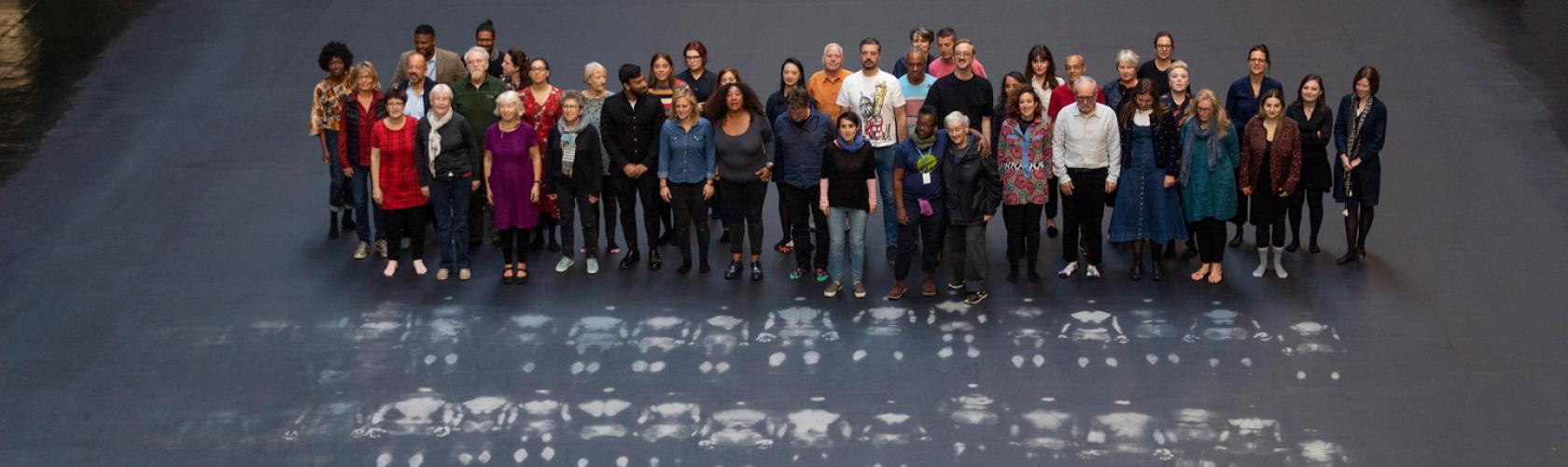

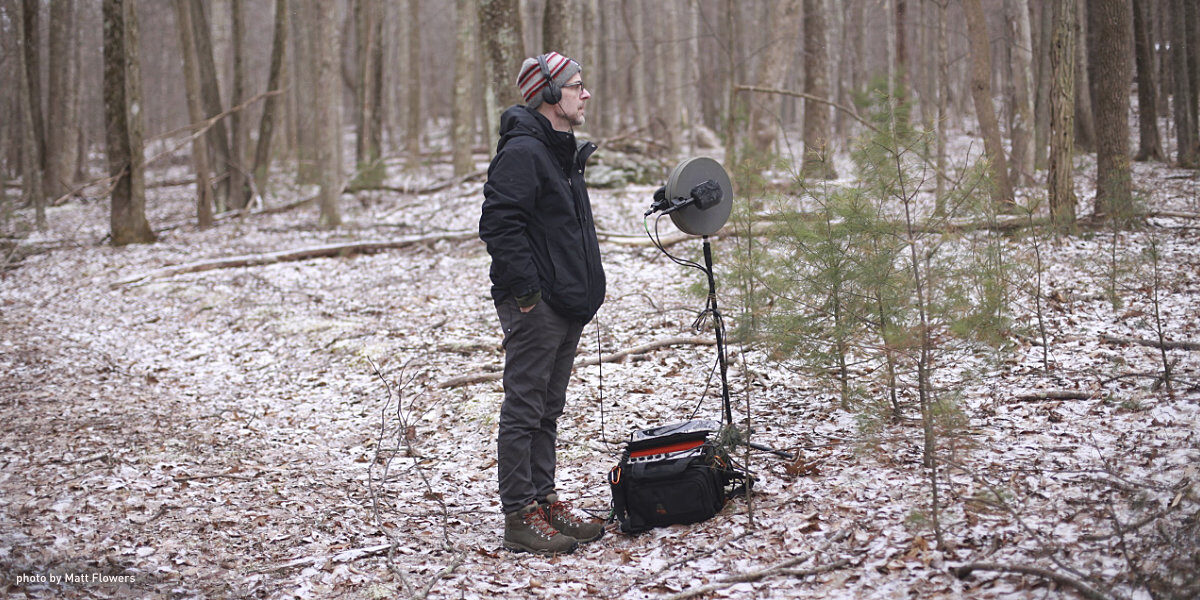 Stephen Vitiello (photo by Matt Flowers) (