10.2: Introduction to Installation Art, part 2

Read by Thu Nov 06, 8am
Reading Response due Thu Nov 06, 8am
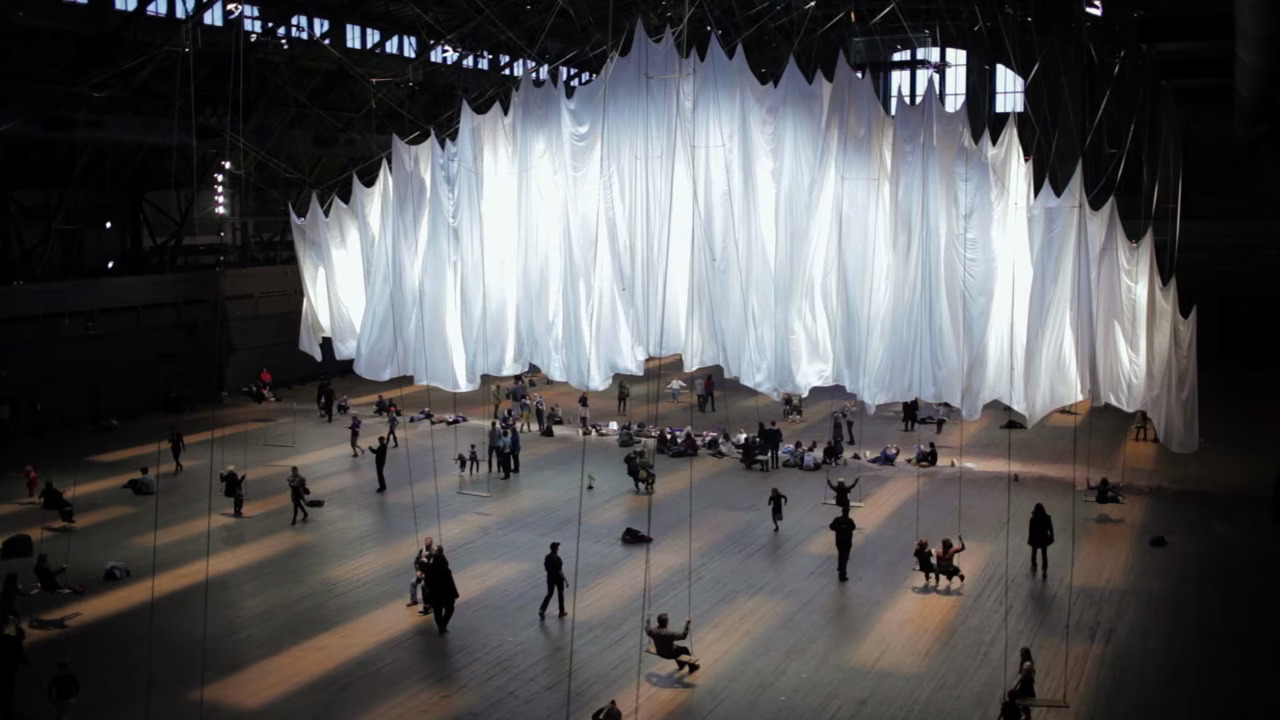
Ann Hamilton (1956–), the event of a thread, 2012

Ann Hamilton (1956–)
the event of a thread, 2012

Why?

Seeing Installation Art and hearing from its practitioners is helpful is gaining ideas about not only the possibilities of the genre, but what territory has already been covered as you work toward your own installation.

Note: Due to the permissive nature of installation art, some material below may be inappropriate for sensitive individuals. If you have concerns, please contact the instructor and they can guide you to material that will be suitable for you.

Required

Ann Hamilton in “Spirituality”, Art21

“Whether working with sculpture, textiles, film, and sound, or even her unique mouth-operated pinhole cameras, Ann Hamilton finds all her art to be about a ‘very fundamental act of making.’ Ann Hamilton was born in 1956 in Lima, Ohio.”

Ann Hamilton: “the event of a thread”, Art21

“From Manhattan's Park Avenue Armory, artist Ann Hamilton discusses her installation, "the event of a thread" (2012), which occupied the Armory's cavernous drill hall. Hamilton, whose artwork often deals with the connection between text and textiles, was present at the Armory every day during the installation's one-month run. During that time she was able to witness the various ways visitors chose to engage with the different though interconnected elements of the artwork. ‘It's very intimate, and yet, it's very large and anonymous—this quality of solitude and being in a congregation or group of people,’ says Hamilton. ‘The feeling of that is actually very comforting, and something that we need.’ Ann Hamilton's work is a unique blend of performance, photography, video, textiles, and sculpture. Best known for her sensual, environmental installations, Hamilton's work often combine sensory elements of sound, taste, smell and touch. She is as interested in verbal and written language as she is in the visual, and sees the two as related and mutable elements.”

Olafur Eliasson in “Berlin”, Art21

“With the support of his interdisciplinary studio, Olafur Eliasson produces epic, technically sophisticated sculptures and installations, using natural elements like light, water, and air to alter viewers’ sensory perceptions. From 120 foot tall waterfalls floating above New York’s East River to chunks of arctic ice installed in a Parisian plaza, his immersive environments, public installations, and architectural projects are motivated by the belief that art has the power to make viewers think differently about the world. Expanding the role of the artist, Eliasson contemplates how art can function as a ‘civic muscle,’ offering solutions to global problems like climate change and renewable energy.”

Song Dong & Yin Xiuzhen in “Beijing”, Art21

“Song Dong and Yin Xiuzhen, two Beijing natives, reflect on three decades of deeply personal artmaking and the shared experience of living in Beijing through its unprecedented transformation. This film follows the pair as they install the latest iteration of their collaborative project, ‘The Way of the Chopsticks.’ In their sculptures and installations, both artists work with readily accessible materials, like clothing, roofing tiles, window frames, and household objects, using art to come to terms with their personal grief, memories, and anxiety about the future. At the opening of their "Chopsticks" exhibition, Yin and Song’s teenage daughter and old friends join them for a family-style dinner, a moment symbolic of two artists whose careers have been dedicated to exploring the emotional complexities of their lives and communities. ‘I don’t think art is about making objects. It’s more about the process,’ says Yin. ‘It’s an attitude toward life.’”

Wolfgang Laib in “Legacy”, Art21

“Inspired by the teachings of Laotzi, by the modern artist Brancusi, and by formative experiences with his family in Germany and India, Wolfgang Laib’s sculptures seem to connect the past and present, the ephemeral and eternal. His attention to human scale, duration of time, and his choice of materials give his works the power to transport us to unexpected realms of memory, sensory pleasure, and contemplation.”

Supplementary Readings

Installation Artists
Installation Art History
What Is___?: Installation Art, Irish Museum of Modern Art

Read both essays: “What is ___? Talks Series,” and “Here and Now: Art, Trickery, Installation”

“Installation Art is a broad term applied to a range of arts practice which involves the installation or configuration of objects in a space, where the totality of objects and space comprise the artwork. Installation Art is a mode of production and display of artwork rather than a movement or style. Installation Art can comprise traditional and non-traditional Media, such as Painting, Sculpture, Readymades, Found Objects, Drawing and Text.”

Interviews with Installation Artists
Jenny Holzer, Art21

“Jenny Holzer’s history as a typesetter feels obvious, once you’re acquainted with her signature text-based artworks. From PROTECT PROTECT at the Museum of Contemporary Art, Chicago, Holzer recounts her fondness for programming the LED electronics that display her statements. Within the programming process, Holzer curates the speed of the revolving message, and orchestrates the pauses and flashes of the phrase. The emission of light by the LEDs is affected by each of these variables, simultaneously influencing the mood and energy of the exhibition space.”

Writing & Difficulty: Jenny Holzer, Art21

“Jenny Holzer discusses her difficult relationship to writing during the installation of the exhibition PROTECT PROTECT at the Museum of Contemporary Art, Chicago. ‘I have no idea whether I’ll write again,’ says Holzer. ‘One reason why I left it is because I tend to write about the most ghastly subjects. So it’s not just the difficulty in having something turn out right, it’s the difficulty of staying with the material long enough to complete it.’While multiple factors have contributed to Holzer’s writing hiatus, her body of work remains as poignant and provocative as ever. Whether questioning capitalist impulses, or describing torture, Holzer’s art expresses concepts and questions through subversive lightworks which present her queries through projections or streamlined LED marquis. ‘My work might be like theater in that I hope there’s an audience,’ says the artist.”

Theaster Gates: Collecting, Art21

“Theaster Gates creates sculptures with clay, tar, and renovated buildings, transforming the raw material of urban neighborhoods into radically reimagined vessels of opportunity for the community. Establishing a virtuous circle between fine art and social progress, Gates strips dilapidated buildings of their components, transforming those elements into sculptures that act as bonds or investments, the proceeds of which are used to finance the rehabilitation of entire city blocks. Many of the artist’s works evoke his African-American identity and the broader struggle for civil rights, from sculptures incorporating fire hoses, to events organized around soul food, and choral performances by the experimental musical ensemble Black Monks of Mississippi, led by Gates himself.”

Theaster Gates in “Chicago”, Art21

“Theaster Gates first encountered creativity in the music of Black churches on his journey to becoming an urban planner, potter, and artist. Gates creates sculptures out of clay, tar, and renovated buildings, transforming the raw material of the South Side into radically reimagined vessels of opportunity for the community.”

Postcommodity in “Borderlands”, Art21

“The interdisciplinary collective Postcommodity creates site-specific installations and interventions that critically examine our modern-day institutions and systems through the history and perspectives of Indigenous people. Influenced by growing up in the southwestern United States, the artists Cristóbal Martínez and Kade L. Twist revisit their 2015 public installation, ‘Repellent Fence,’ produced with previous Postcommodity artist, Raven Chacon. A two-mile-long line of enormous balloons across the Arizona-Sonora border, “Repellent Fence’ symbolically sutured together cultures and lands that had been unified long before borders were drawn. To examine our cultural institutions and their demographic future, the pair thinks of the coming decades, when the U.S. Census Bureau predicts a non-White majority. ‘Our job is to allow a new public memory to be born,’ says Martínez. ‘Here’s our lens; take a look at the world through it, and tell us what you think.’”

Judy Pfaff in “Romance”, Art21

“Balancing intense planning with improvisational decision-making, Judy Pfaff creates exuberant, sprawling sculptures and installations that weave landscape, architecture, and synthetic color into a tense yet organic whole. Judy Pfaff was born in London, England, in 1946.”

Contemporary Artist Ranjani Shettar on Her Installation, MetCollects
"Can nature's fragility be perceived?" Ranjani Shettar on her installation Seven ponds and a few raindrops
Other Installation Art Examples
Installation Art: How to Make Money?
Making money as an INSTALLATION artist HOW-TO guide!, Spark Box Studio Printshop & Artist Residency

“It may seem impossible to make a living as an installation artist because … what exactly are you ‘selling’? An experience. An environment. A transformative space. A community building opportunity. In this episode of Art Discourse we answer the question: ‘How do installation artists make money from their art?’ We discuss NINE different ways you can get paid for your installation art. From granting to arts festivals there are so many different ways installation artists can get paid for their immersive work! We’ll be honest, when we first started making installation artwork we didn’t have a clue what the possibilities were. We still don’t know all of them. But after creating installations almost 5 years now we’ve found that they are a blast to create and often well funded.”

Response Question

Remember to cite specific instances from the “readings” to support your views.

  • What possibilities opened up for your from watching these examples?
  • Which artist project inspired you the most and why?
10.1: Introduction to Installation Art, part 1

Read by Tue Nov 04, 8am
Reading Response due Thu Nov 06, 8am
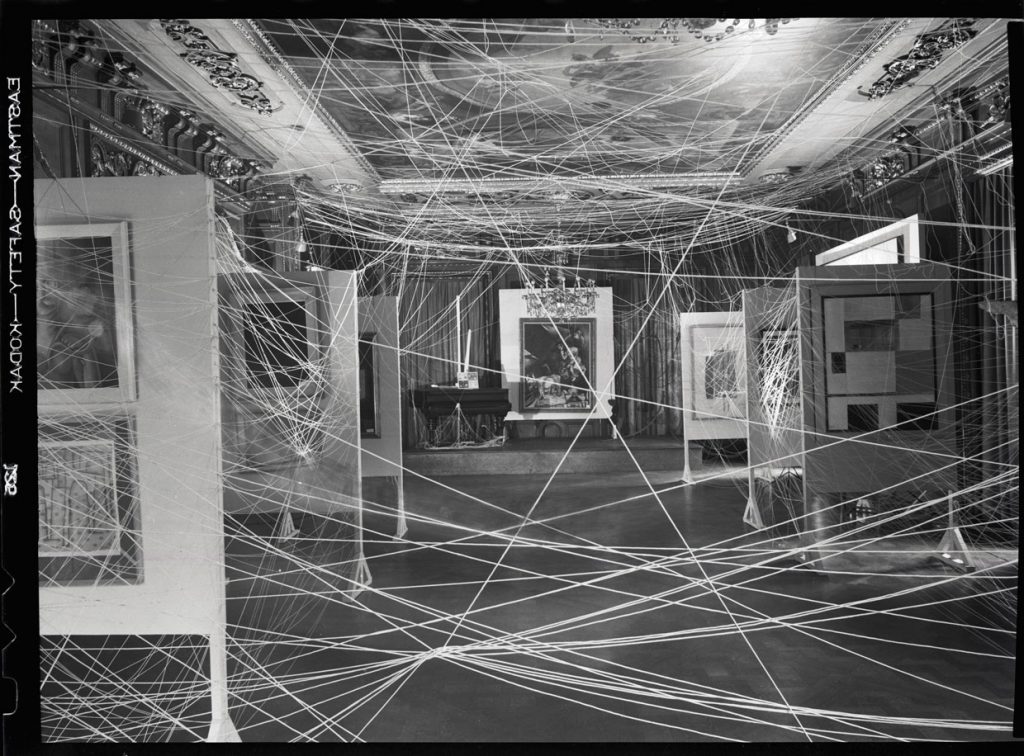
John Schiff, Installation View of Exhibition ‘First Papers of Surrealism’ showing Marcel Duchamp's (1887–1968) String Installation. 1942. Gelatin silver print. Philadelphia Museum of Art / Art Resource, NY

John Schiff (1907–1976)
Installation View of Exhibition ‘First Papers of Surrealism’ showing Marcel Duchamp‘s (1887–1968) String Installation, 1942
Gelatin silver print.
Philadelphia Museum of Art / Art Resource, NY

Why?

Installation Art has become a catch-all phrase for any work that takes its space into account. In that way it can be overused and lose its meaning. Diving into the origins of Installation Art can help explain how the term was initially used and how it evolved. As you learn more about Installation Art, I encourage you to look beyond just the various manifestations, but how the art form might be used to various effects—emotional, spiritual, physical, intellectual, and more.

Note: Due to the permissive nature of installation art, some material below may be inappropriate for sensitive individuals. If you have concerns, please contact the instructor and they can guide you to material that will be suitable for you.

Required

What Is___?: Installation Art, Irish Museum of Modern Art

Read both essays: “What is ___? Talks Series,” and “Here and Now: Art, Trickery, Installation”

“Installation Art is a broad term applied to a range of arts practice which involves the installation or configuration of objects in a space, where the totality of objects and space comprise the artwork. Installation Art is a mode of production and display of artwork rather than a movement or style. Installation Art can comprise traditional and non-traditional Media, such as Painting, Sculpture, Readymades, Found Objects, Drawing and Text.”

Understand Installation Art, Let's Learn About Art

“Installation Art can be daunting and confusing. Learn how to understand installation through its 4 key elements, using Olafur Eliasson's art exhibition in Singapore as a case study. Hope that you will find this video enjoyable and useful as you learn more about art.”

But Is It Installation Art?, Tate etc.

“What does the term ‘installation art’ mean? Does it apply to big dark rooms that you stumble into to watch videos? Or empty rooms in which the lights go on and off? Or chaotic spaces brimming with photocopied newspapers, books, pictures and slogans? The Serpentine Gallery announced its summer exhibition of work by Gabriel Orozco with the claim that he is ‘the leading conceptual and installation artist of his generation’—yet the show comprised paintings, sculptures and photography. Almost any arrangement of objects in a given space can now be referred to as installation art, from a conventional display of paintings to a few well-placed sculptures in a garden. It has become the catch-all description that draws attention to its staging, and as a result it’s almost totally meaningless.”

Supplementary Readings

Installation Artists
Installation Art History
Interviews with Installation Artists
Jenny Holzer, Art21

“Jenny Holzer’s history as a typesetter feels obvious, once you’re acquainted with her signature text-based artworks. From PROTECT PROTECT at the Museum of Contemporary Art, Chicago, Holzer recounts her fondness for programming the LED electronics that display her statements. Within the programming process, Holzer curates the speed of the revolving message, and orchestrates the pauses and flashes of the phrase. The emission of light by the LEDs is affected by each of these variables, simultaneously influencing the mood and energy of the exhibition space.”

Writing & Difficulty: Jenny Holzer, Art21

“Jenny Holzer discusses her difficult relationship to writing during the installation of the exhibition PROTECT PROTECT at the Museum of Contemporary Art, Chicago. ‘I have no idea whether I’ll write again,’ says Holzer. ‘One reason why I left it is because I tend to write about the most ghastly subjects. So it’s not just the difficulty in having something turn out right, it’s the difficulty of staying with the material long enough to complete it.’While multiple factors have contributed to Holzer’s writing hiatus, her body of work remains as poignant and provocative as ever. Whether questioning capitalist impulses, or describing torture, Holzer’s art expresses concepts and questions through subversive lightworks which present her queries through projections or streamlined LED marquis. ‘My work might be like theater in that I hope there’s an audience,’ says the artist.”

Theaster Gates: Collecting, Art21

“Theaster Gates creates sculptures with clay, tar, and renovated buildings, transforming the raw material of urban neighborhoods into radically reimagined vessels of opportunity for the community. Establishing a virtuous circle between fine art and social progress, Gates strips dilapidated buildings of their components, transforming those elements into sculptures that act as bonds or investments, the proceeds of which are used to finance the rehabilitation of entire city blocks. Many of the artist’s works evoke his African-American identity and the broader struggle for civil rights, from sculptures incorporating fire hoses, to events organized around soul food, and choral performances by the experimental musical ensemble Black Monks of Mississippi, led by Gates himself.”

Theaster Gates in “Chicago”, Art21

“Theaster Gates first encountered creativity in the music of Black churches on his journey to becoming an urban planner, potter, and artist. Gates creates sculptures out of clay, tar, and renovated buildings, transforming the raw material of the South Side into radically reimagined vessels of opportunity for the community.”

Postcommodity in “Borderlands”, Art21

“The interdisciplinary collective Postcommodity creates site-specific installations and interventions that critically examine our modern-day institutions and systems through the history and perspectives of Indigenous people. Influenced by growing up in the southwestern United States, the artists Cristóbal Martínez and Kade L. Twist revisit their 2015 public installation, ‘Repellent Fence,’ produced with previous Postcommodity artist, Raven Chacon. A two-mile-long line of enormous balloons across the Arizona-Sonora border, “Repellent Fence’ symbolically sutured together cultures and lands that had been unified long before borders were drawn. To examine our cultural institutions and their demographic future, the pair thinks of the coming decades, when the U.S. Census Bureau predicts a non-White majority. ‘Our job is to allow a new public memory to be born,’ says Martínez. ‘Here’s our lens; take a look at the world through it, and tell us what you think.’”

Judy Pfaff in “Romance”, Art21

“Balancing intense planning with improvisational decision-making, Judy Pfaff creates exuberant, sprawling sculptures and installations that weave landscape, architecture, and synthetic color into a tense yet organic whole. Judy Pfaff was born in London, England, in 1946.”

Ann Hamilton in “Spirituality”, Art21

“Whether working with sculpture, textiles, film, and sound, or even her unique mouth-operated pinhole cameras, Ann Hamilton finds all her art to be about a ‘very fundamental act of making.’ Ann Hamilton was born in 1956 in Lima, Ohio.”

Ann Hamilton: “the event of a thread”, Art21

“From Manhattan's Park Avenue Armory, artist Ann Hamilton discusses her installation, "the event of a thread" (2012), which occupied the Armory's cavernous drill hall. Hamilton, whose artwork often deals with the connection between text and textiles, was present at the Armory every day during the installation's one-month run. During that time she was able to witness the various ways visitors chose to engage with the different though interconnected elements of the artwork. ‘It's very intimate, and yet, it's very large and anonymous—this quality of solitude and being in a congregation or group of people,’ says Hamilton. ‘The feeling of that is actually very comforting, and something that we need.’ Ann Hamilton's work is a unique blend of performance, photography, video, textiles, and sculpture. Best known for her sensual, environmental installations, Hamilton's work often combine sensory elements of sound, taste, smell and touch. She is as interested in verbal and written language as she is in the visual, and sees the two as related and mutable elements.”

Wolfgang Laib in “Legacy”, Art21

“Inspired by the teachings of Laotzi, by the modern artist Brancusi, and by formative experiences with his family in Germany and India, Wolfgang Laib’s sculptures seem to connect the past and present, the ephemeral and eternal. His attention to human scale, duration of time, and his choice of materials give his works the power to transport us to unexpected realms of memory, sensory pleasure, and contemplation.”

Other Installation Art Examples
Installation Art: How to Make Money?
Making money as an INSTALLATION artist HOW-TO guide!, Spark Box Studio Printshop & Artist Residency

“It may seem impossible to make a living as an installation artist because … what exactly are you ‘selling’? An experience. An environment. A transformative space. A community building opportunity. In this episode of Art Discourse we answer the question: ‘How do installation artists make money from their art?’ We discuss NINE different ways you can get paid for your installation art. From granting to arts festivals there are so many different ways installation artists can get paid for their immersive work! We’ll be honest, when we first started making installation artwork we didn’t have a clue what the possibilities were. We still don’t know all of them. But after creating installations almost 5 years now we’ve found that they are a blast to create and often well funded.”

Response Question

Remember to cite specific instances from the “readings” to support your views.

  • What excites you about the prospect of doing installation art? What gives you pause?
  • How might things we have discussed up to this point in the semester inform your approach to installation art?

7.2: Video Tutorials

Read by Thu Oct 16, 8am
Reading Response due Thu Oct 16, 8am
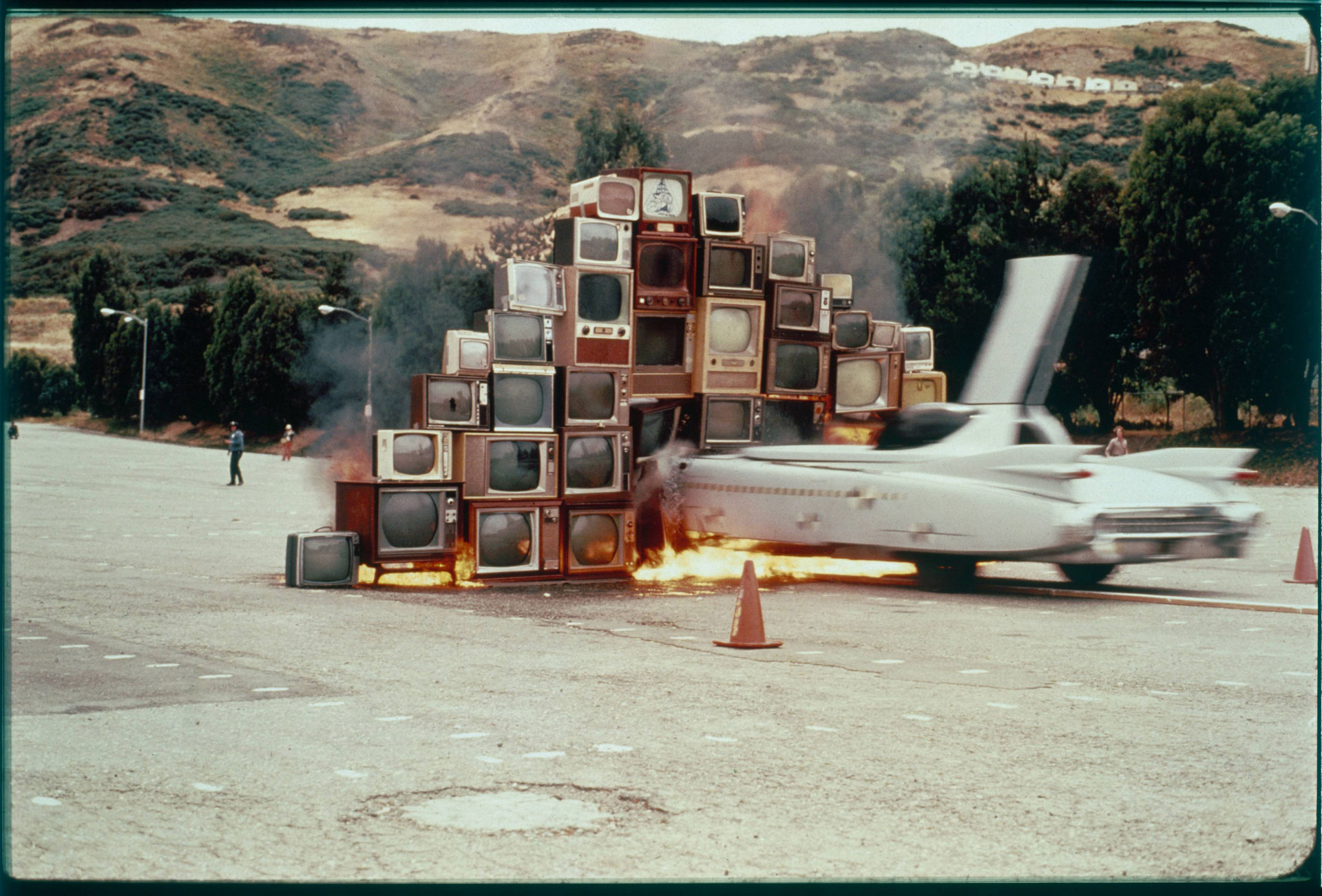
Ant Farm (1968–2003), Media Burn, 1975

Ant Farm (1968–2003),
Media Burn, 1975

Why?

To familiarize yourself with basic video editing you are provided with tutorials using Adobe Premiere, DaVinci, and more. Dive in at the level you are at, and learn more than you currently know.

Required

Select at least sixty minutes of material to learn more about video editing. I recommend working along with all of the tutorials to solidify the information in your head and help you create muscle memory when it comes to hot keys, finding menus, etc.

Shooting Video
Video Shot Quick Guide

“A pocket-sized technical guide to shooting good video that [Collin Bradford] made for [his] students.”

Photo and Video Glossary

This is an aggregated list of terms and definitions along with illustrative images and videos to help you understand some of the concepts around photo and video work—particularly dealing with cameras and understanding how they work.

DSLR for Beginners | How to Set Your Camera Up to Shoot Video, Canon ANZ

Learn how to set up your DSLR camera for video shooting with pro tips and settings from photographer, Neal Walters. In this video Neal takes us through the tips and tricks he uses to get his camera set up for capturing video content.

Logging and Organizing Video Files
How to Organize Your Video Assets | Folder Structure for Video Editors, Alexander Behne

“Learn how to organize your video files so that you never again have to go insane tracking down that one last piece of footage. Although I edit in Adobe Premiere Pro and the examples here specifically deal with projects created in that software, the same basic principles will work regardless of which NLE you're using.”

6 Easy Steps for Logging Footage, Pond5 Blog

“Need help logging footage? Let’s look at six easy steps that will get you on your way and your next project out the door. No matter what type of production you do, at some point you will need to go through and log the footage and ready it for editing. This practice holds true for narrative, documentary, commercial, and industrial. There are some that I’ve met over the years who do not take the time to run through this process, and in the end their project suffers because of it.”

My Video Editing Folder Structure and File Management Template, Joshua Kirk

“Hey guys this is a simple video today explaining my folder structure and file management template for every new video project we produce in the commercial world. This folder structure is simple enough to duplicate for every project and robust enough to be expanded for larger projects.”

Video Editing with Premiere
Adobe Premiere Tutorials, LinkedIn Learning
Once you have logged in using your Provo City Library credentials, then you can click here, or do you own search for “Adobe Premiere.”
Learn Five Editing Basics in Premiere Pro, Adobe

“See how easy it is to import your footage, create a sequence, add a title, adjust audio levels, and export video in Premiere Pro.”

Learn Premiere Pro, Adobe

This is a series of tutorials on different aspects of Adobe Premiere—from working with graphics and titles, to color matching, to captioning videos, to audio mixing.

Learn Premiere Pro in 15 Minutes! (2025), Premiere Basics

“Learn how to use Adobe Premiere Pro to edit your videos for beginners in this Adobe Premiere Pro tutorial video.” Note: There is a built-in ad for a business from 05:13 to 07:16. Feel free to skip that.

Learn to Use a Green Screen in Premiere Pro with Motoki, Adobe Video and Motion

“Join Content Creator Motoki as he shows you his favorite tips and tricks for mastering the green screen. Ever heard of a blue screen? In this video, he'll show you when you might want to consider using a blue screen instead of a green screen, and how to edit your awesome effects in PremierePro.”

Video Effects with After Effects
Adobe After Effects Tutorials, LinkedIn Learning

Once you have logged in using your Provo City Library credentials, then you can click here, or do you own search for “Adobe After Effects.”

DaVinci: Non-Adobe Video Editing
DaVinci Resolve 18 – COMPLETE Tutorial For Beginners in 2024!, Primal Video

Note: You will want to download and install DaVinci Resolve (it is free). “Our complete DaVinci Resolve tutorial for beginners! Learn how to edit videos with DaVinci Resolve 18 & find out why it’s one of the best free video editing software right now.”

Perfect Green Screen: Flawless Chroma Key in DaVinci Resolve, The Show Show

“DaVinci Resolve chroma key 3D qualifier easily fixes green screen shadows, wrinkles and other problems that normally result in a bad key.”

Non-Adobe Video Effects
Learn Fusion in 10 Minutes! – Beginner Tutorial for Blackmagic DaVinci Resolve, Casey Faris

This is a quick introduction to DaVinci Resolve's Fusion, which is akin to Adobe After Effects. This is just part of the free DaVinci Resolve download.

Green Screen
Learn to Use a Green Screen in Premiere Pro with Motoki, Adobe Video and Motion

“Join Content Creator Motoki as he shows you his favorite tips and tricks for mastering the green screen. Ever heard of a blue screen? In this video, he'll show you when you might want to consider using a blue screen instead of a green screen, and how to edit your awesome effects in PremierePro.”

How to Green Screen (6 Easy Steps), Full Time Filmmaker

“Learn how to use a green screen in just 6 easy steps! With this simple tutorial, you'll be able to create professional-looking videos with awesome backgrounds in no time. From setting up your green screen to editing your footage, we'll guide you through each step of the process. Whether you're a beginner or looking to up your video production game, this tutorial will teach you everything you need to know about using a green screen. Get ready to take your videos to the next level!”

Perfect Green Screen: Flawless Chroma Key in DaVinci Resolve, The Show Show

“DaVinci Resolve chroma key 3D qualifier easily fixes green screen shadows, wrinkles and other problems that normally result in a bad key.”

Datamoshing
Datamoshing Tutorial (P – FRAME), Shaun Ray Edits

“This is a short video detailing the basics of P-Frame Datamoshing.”

Datamoshing Tutorial Video, Shaun Ray Edits

“This is a short video detailing the basics of I-Frame Datamoshing.”

Animation
How to MAKE a STOP-MOTION VIDEO with a PHONE, Learn Online Video

This video walks through how to create a stop-motion animation video using the Stop Motion Studio app for iOS.

The Adobe Animate CC Crash Course (Beginner Friendly!), Alex Grigg // Animation for Anyone

“Learn the fundamentals of Animation step by step! Lets learn the Adobe Animate CC together! This is a crash course which will give you all the skills you'll need to start making your own animation. There is a whole lot more to Animate CC, but if you're starting out this is a good place to begin :)”

“Update- It looks like Adobe has removed Edit Multiple Frames from the timeline in the 2024 version... You can now find it in Control-Timeline-Edit Multiple Frames, or with Alt Shift E.”

Learn Animate, Adobe

This site has a lot of video tutorials on how to use Adobe Animate.

Response Question

Remember to cite specific instances from the “readings” to support your views.

  • What sparked something in your thinking that may impact your future projects?

7.1: Introduction to Video Art

Read by Tue Oct 14, 8am
Reading Response due Thu Oct 16, 8am

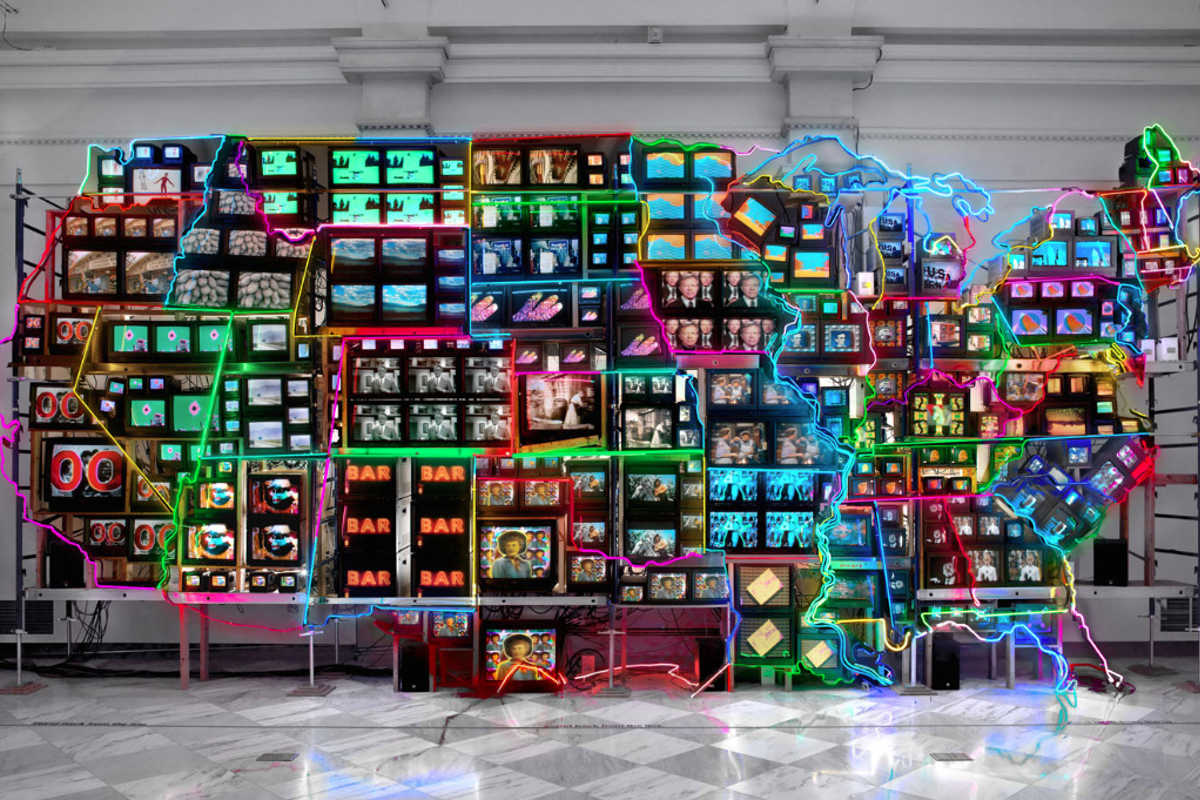
Nam June Paik (1932–2006)
Electronic Superhighway: Continental U.S., Alaska, Hawaii, 1995
Fifty-one channel video installation (including one closed-circuit television feed), custom electronics, neon lighting, steel and wood; color, sound
approx. 15 x 40 x 4 ft.
Smithsonian American Art Museum, Gift of the artist, 2002.23, © Nam June Paik Estate

Why?

Video Art emerged from the fields of experimental film and performance art and has grown in the digital age. To understand how it is practiced now and its potential for the future, it is important to understand where it came from and how it has developed.

Note: Due to the nature of video art including aspects of performance art, some material below may be inappropriate for sensitive individuals. If you have concerns, please contact the instructor and they can guide you to material that will be suitable for you.

Required

The Case for Video Art, The Art Assignment
“What is video art? How is it any different from all the other moving pictures that are apparently not-art? Let's explore its history and present.”
The Case for Video Art—Where Does It Stand Today?, Widewalls

“Ok, you say, so you have a person, that makes ‘moving pictures’ in one way or another. How does his work separates from the work of, say, movie directors who, as well, are creating ‘moving pictures’? The biggest difference between video art and movies is the disrespect of the aforementioned one to all of the latter's conventions and rules. Usually, there's got to exist at least one of three following things in a motion picture: story, actors and screenplay. Video art is not interested in that, but rather in exploring the maximum possibilities of the media, and/or to challenge viewer's ideas about the world that surrounds him/her. It usually has many forms - broadcasted recordings, projections, performances with TV sets, online streams, but today, video installation is the most common form of video art. Installation could be seen at museums and galleries, but it is often a part of some wider work, associated with design, sculpture, and architecture.”

Video Art, Explained | Neus Miró, CIFRAWORLD

“Why is this video 7 hours long? Why doesn’t it have a plot? Is TikTok secretly the future of art? Did Andy Warhol invent video art, or was he just a branding genius? And what do medieval churches have to do with our idea of beauty? We threw 8 naive questions about video art at Neus Miró—curator, art critic, professor, and certified cinephile. Her superpower is decoding the deeper story behind the screen or the white cube of the gallery. But one of her true passions is movies. The line for tickets. The flicker of the projector. That silver screen glow. For Neus, the magic of film and video art never fades. She walked us through the history of video art, breaking down the biggest milestones and revealing what makes this medium so impactful.”

Telephones

“American and Swiss artist Christian Marclay emphasizes ‘the process.’ He deconstructs seemingly simple actions further into finite elements and creates collages from the scraps. Before Video Quartet and his monumental 24-hour effort The Clock was Telephones (1995), a piecemeal video collage [. . .] that plunders 130 Hollywood films.

“Using his building blocks—dialing, greeting, conversing, farewells and hang-ups—Marclay plays with the notion of cinematic continuity by splicing newer and older films into his own narrative. The video opens with a man walking into a booth, the word ‘telephone’ in all caps, he slowly dials. His action is followed by several more clips of dialing, technology jumps from clunky rotary dialers from the pre-area code days to ‘up-to-date’ push buttons phones (apple would later, ahem, appropriate the spirit of Telelphones for an ad). Perhaps most impressive is Marclay’s ability to create a story from such disparate sources. Clips begin to talk to one another—A man speaks deliberately into the mouthpiece ‘I haven’t been able to think or concentrate on anything except you.’ the video cuts to a second man who hesitantly says ‘I see….’”

Rapture

“Rapture (1999)
Rapture is an installation of two synchronized black-and-white video sequences that are projected on opposite walls; large in scale, they evoke cinema screens. Working with hours of footage and a team of editors, the artist constructed two parallel narratives: on one side of the room, men populate an architectural environment; in the other sequence, women move within a natural one. The piece begins with images of a stone fortress and a hostile desert, respectively. The fortress dissolves into a shot of over one hundred men—uniformly dressed in plain white shirts and black pants—walking quickly through the cobblestone streets of an old city and entering the gates of the fortress. Simultaneously, the desert scene dissolves into a shot of an apparently equal number of women, wearing flowing, full-length veils, or chadors, emerging from different points in the barren landscape.”

Technology/Transformation: Wonder Woman

“Explosive bursts of fire open Technology/Transformation, an incendiary deconstruction of the ideology embedded in television form and pop cultural iconography. Appropriating imagery from the 1970s TV series Wonder Woman, Birnbaum isolates and repeats the moment of the ‘real’ woman's symbolic transformation into super-hero. Entrapped in her magical metamorphosis by Birnbaum's stuttering edits, Wonder Woman spins dizzily like a music-box doll. Through radical manipulation of this female Pop icon, she subverts its meaning within the television text. Arresting the flow of images through fragmentation and repetition, Birnbaum condenses the comic-book narrative—Wonder Woman deflects bullets off her bracelets, "cuts" her throat in a hall of mirrors—distilling its essence to allow the subtext to emerge. In a further textual deconstruction, she spells out the words to the song Wonder Woman in Discoland on the screen. The lyrics' double entendres (‘Get us out from under... Wonder Woman’) reveal the sexual source of the superwoman's supposed empowerment: ‘Shake thy Wonder Maker.’ Writing about the “stutter-step progression of 'extended moments' of transformation from Wonder Woman,’ Birnbaum states, ‘The abbreviated narrative — running, spinning, saving a man — allows the underlying theme to surface: psychological transformation versus television product. Real becomes Wonder in order to "do good" (be moral) in an (a) or (im)moral society.’”

John 3:16

“In the video John 3:16...a reference to a passage so often quoted that its sort of the Biblical code for the New Testament that gives you the formula for salvation and eternal life. There’s an interesting kind of resonance that I see between this idea of a formula for salvation and eternal life and the promise of digital media that never break down and literally can live forever...that can always be copied endlessly. In a way, the medium itself represents a kind of promise that almost has spiritual overtones.” – Paul Pfeiffer

Supplementary Readings

Video Art History
Video Art: The First Fifty Years

“The curator who founded MoMA's video program recounts the artists and events that defined the medium's first 50 years. Since the introduction of portable consumer electronics nearly a half century ago, artists throughout the world have adapted their latest technologies to art-making. In this book, curator Barbara London traces the history of video art as it transformed into the broader field of media art - from analog to digital, small TV monitors to wall-scale projections, and clunky hardware to user-friendly software. In doing so, she reveals how video evolved from fringe status to be seen as one of the foremost art forms of today.”

Video Art

“In this overview of a still relatively new art form, Rush (director, Palm Beach Inst. of Contemporary Art) asserts that video art emerged as an important medium just as artists embraced conceptual and performance-based art. The popularity of video art marked a shift within contemporary art toward ideas and away from an interest in any specific medium. A key strength of Rush's analysis is his explanation of the link among performance, conceptual art, and video. Rather than exploring the technical qualities of film, artists stage performances on film to communicate ideas. Rush organizes this history around three major themes: the use of video cameras as an extension of artists' own bodies, the time-based qualities of video making way for new kinds of stories, and the combination of video with electronic, digital media to form new hybrid installations.”

Encounters in Video art in Latin America

“The emergence of video art in Latin America is marked by multiple points of development, across more than a dozen artistic centers, over a period of more than twenty-five years. When it was first introduced during the 1960s, video was seen as empowering: the portability of early equipment and the possibility of instant playback allowed artists to challenge and at times subvert the mainstream media. Video art in Latin America was—and still is—closely related to the desire for social change. Themes related to gender, ethnic, and racial identity as well as the consequences of social inequality and ecological disasters have been fundamental to many artists’ practices. This compendium explores the history and current state of artistic experimentation with video throughout Latin America. Departing from the relatively small body of existing scholarship in English, much of which focuses on individual countries, this volume approaches the topic thematically, positioning video artworks from different periods and regions throughout Latin America in dialogue with each other. Organized in four broad sections—Encounters, Networks and Archives, Memory and Crisis, and Indigenous Perspectives—the book’s essays and interviews encourage readers to examine the medium of video across varied chronologies and geographies.”

Interviews with Video Artists
Art21: Video Art

This is the Art21 database of segments concerning video art and artists. Be aware that not all content may be suitable for a BYU audience. Proceed with caution.

“The Last Post”: Shahzia Sikander, Art21

“Artist Shahzia Sikander, filmed in her Manhattan studio, discusses her animated video work The Last Post (2010). Sikander also describes how beginning to create animations was a natural evolution in her studio process because she had already been working with narrative and layering in her paintings and large-scale installations.”

Jenny Holzer, Art21

“Jenny Holzer’s history as a typesetter feels obvious, once you’re acquainted with her signature text-based artworks. From PROTECT PROTECT at the Museum of Contemporary Art, Chicago, Holzer recounts her fondness for programming the LED electronics that display her statements. Within the programming process, Holzer curates the speed of the revolving message, and orchestrates the pauses and flashes of the phrase. The emission of light by the LEDs is affected by each of these variables, simultaneously influencing the mood and energy of the exhibition space.”

Writing & Difficulty: Jenny Holzer, Art21

“Jenny Holzer discusses her difficult relationship to writing during the installation of the exhibition PROTECT PROTECT at the Museum of Contemporary Art, Chicago. ‘I have no idea whether I’ll write again,’ says Holzer. ‘One reason why I left it is because I tend to write about the most ghastly subjects. So it’s not just the difficulty in having something turn out right, it’s the difficulty of staying with the material long enough to complete it.’While multiple factors have contributed to Holzer’s writing hiatus, her body of work remains as poignant and provocative as ever. Whether questioning capitalist impulses, or describing torture, Holzer’s art expresses concepts and questions through subversive lightworks which present her queries through projections or streamlined LED marquis. ‘My work might be like theater in that I hope there’s an audience,’ says the artist.”

Conversations with Noise, John Akomfrah, Art21

“Known for his visually stunning, multichannel video installations, artist and filmmaker John Akomfrah shares a lesser acknowledged, but equally vital component of his work: sound. From his London studio, the artist discusses the transformative and essential role that sound has played in both his artwork and his experience of the world. Between sessions editing recently-shot footage, Akomfrah recalls his early experiences with sound. The artist witnessed the ways that music fostered the social connection at the nightclubs of his youth and co-founded the artist group Black Audio Film Collective, which saw itself primarily as an experimental auditory outfit. His seminal experience with sound came as a university student, when Akomfrah heard the music of Estonian composer Arvo Pärt for the first time. Pärt’s music reconfigured Akomfrah’s understanding of time and of himself within it, motivating his filmic work which weaves together footage from divergent time periods, histories, and themes. While aware that early critics of his work found his use of sound and music “vulgar,” Akomfrah retorts, ‘I like the vulgarity of it.’ ‘That’s the point,’ he adds. ‘The new comes into being via the pathway of vulgarity.’”

“Anlee” Pierre Huyghe, Art21

“French artist Pierre Huyghe discusses his use of Anlee, a Japanese manga character whose copyrights he purchased and loans out to other artists. ‘Normally this kind of sign [Anlee] is bought by people to make advertising or cartoon. It’s a support for narrative,’ says the artist. ‘We give this character to different artists. Different authors speak through this character, in a certain way.’ Anlee has been featured in Huyghe’s One Million Kingdoms (2001), Two Minutes Out of Time (2000), and as part of No Ghost Just a Shell (1999–2003), a collaboration with artist Philippe Parreno.”

Pierre Huyghe in “Romance”, Art21

“‘As I start a project, I always need to create a world. Then I want to enter this world, and my walk through this world is the work,’ says Pierre Huyghe, who lives in both Paris and New York. Huyghe’s films, installations, and public events range from a small-town parade to a puppet theater, from a model amusement park to an expedition in Antarctica. ‘I’m trying to be less narrative, it’s more an emotional landscape that I’m trying to reach here,’ he explains. Huyghe describes how, through the documentation of his scripted realities, he is ‘building a kind of mythology.’ Huyghe believes that his exhibitions are not the endpoint, but rather ‘the starting point to go somewhere else.’”

Other Video Art Examples
Semiotics of the Kitchen

Semiotics of the Kitchen adopts the form of a parodic cooking demonstration in which, Rosler states, ‘An anti-Julia Child replaces the domesticated “meaning” of tools with a lexicon of rage and frustration.’ In this performance-based work, a static camera is focused on a woman in a kitchen. On a counter before her are a variety of utensils, each of which she picks up, names and proceeds to demonstrate, but with gestures that depart from the normal uses of the tool. In an ironic grammatology of sound and gesture, the woman and her implements enter and transgress the familiar system of everyday kitchen meanings—the securely understood signs of domestic industry and food production erupt into anger and violence. In this alphabet of kitchen implements, states Rosler, ‘when the woman speaks, she names her own oppression.’”

Guitar Drag, Christian Marclay (1999)

“This video depicts a pickup truck dragging an amplified, electric guitar tied by a rope across a Texas roadway to its aggressive destruction. The many-layered video work references the practice of smashing guitars during rock concerts and demonstrates Marclay’s interest in inventing new types of sound. The piece was also created in response to the 1998 murder of 49-year-old James Byrd, Jr. of Jasper, Texas by three white supremacists and the tragedy’s widespread repercussions. Guitar Drag not only resonates with our aural and visual senses, but also simultaneously investigates multiple layers of history, race, geography, and timely social issues. Since 2000, Guitar Drag has been shown 24 times in museums and galleries, both nationally and internationally, including the Hayward Gallery in London, Gallery Koyanagi in Tokyo, Museum of Contemporary Art, Chicago, ZKM Center for Art and Media in Karlsruhe, Germany, and the Smithsonian Institution in Washington, DC. Sixteen years after its initial making, Artpace proudly presents the completed version of Marclay’s Guitar Drag for its Texas premiere.”

Teaching a Plant the Alphabet

“Teaching a Plant the Alphabet is an exercise in futility, an absurdist lesson in cognition and recognition. The scenario is elementary: A small potted plant sits atop a stool. In the role of teacher, Baldessari holds up a series of children's alphabet cards in sequence, repeating each letter to the plant until he has completed the alphabet. The plant, of course, does not respond. Eliciting deadpan humor from the incongruous juxtaposition of the rote instruction and the uncomprehending pupil, Baldessari creates illogic from a logical construct, making nonsense from sense. An elaboration of working notes in which Baldessari wrote, ‘Is it worth it to teach ants the alphabet?’ this piece also responds to Joseph Beuys' 1965 performance How to Explain Pictures to a Dead Hare.” – EAI

Dance or Walk on the Perimeter of a Square

“For this film, Nauman made a square of masking tape on the studio floor, with each side marked at its halfway point. To the sound of a metronome and beginning at one corner, he methodically moves around the perimeter of the square, sometimes facing into its interior, sometimes out. Each pace is the equivalent of half the length of a side of the taped square. He uses the hip-swaying walk in Walk with Contrapposto.” – EAI

Mario Movie

Mario Movie (2005) was made by Cory Arcangel with Paper Rad. It is a 15 minute movie made on a Super Mario Brothers cartridge.”

Trash Talking
Note: There is some bleeped cursing and adult content in this video. “This DVD includes lots of ephemera filling every color on the PANTONE wheel, but also including the recurring Alfe character in a brand new (never aired) TV Pilot. Also included will be the ultimate PAPER RAD "Guide to CD-ROMS" - essential knowledge for jammers everywhere. Also word comes from PAPER RAD HQ that this shiny video capsule will have "multi multi media, box eyes, and Future Genies out-takes" When all the footage is bonus, seated TV viewers come out ahead. This is for fans young and old looking for strange new voices! Put this on the next time you turn on, or the next time you turn on a small community through introduction of smiley faces into public water supply areas! Seriously buy a box lot of 30, the future is cheap if you buy in the present. Stock up for the Kulture Warz!”
Deshotten 1.0

Note: Contains adult language and scenes of gun violence. “Deshotten 1.0

akingdoncomethas

“A montage of filmed sermons and gospel songs performed in black churches from the 1980s to the 2000s.”

Fountain

“Fountain is a video that originated from a live performance of drinking water from a mirror. The image of confronting one’s own image recalls Narcissus, the Greek god that fell in love with his own image without recognizing it as his own, in some way being a splitting of the interior and exterior selves. In Fountain the image attempts to become whole again by drinking in the image of itself.”

Tooba

“Her poetic two-channel video installation Tooba is based on the Koran, in which Tooba, the sacred tree of paradise, offers shelter and sustenance to those in need. Neshat’s video places a woman within a groove in the trunk of a large fig tree, symbolising its soul. They stand, alone, in a stone-walled garden set in a mountainous landscape. Men and women draw near and enter the enclosure, seeking refuge, as the Tooba-woman disappears into the Tooba-tree. The piece is ambiguous. Who has agency? Is it the crowd, who ‘invade’ the garden or the tree-woman who draws them towards her like a magnet? Tooba is dedicated to Iranian writer Shahrnush Parsipour, whose novel Women without Men concerns five women sojourning in a garden, one of whom is transformed into a tree.”

Lennon Sontag Beuys

This is a 02:10 video looped. “The artist animates documentary footage of John Lennon and Yoko Ono's 1969 Amsterdam "bed-in" for peace, a 2001 lecture delivered by the late media philosopher Susan Sontag at Columbia University, and Joseph Beuys' 1974 lecture at the New School for Social Research in New York. These three channels play simultaneously, projected side-by-side on one wall. These videos are being made available for noncommercial and educational use only. All rights to this recorded material belong to Kota Ezawa.”

Purple Mountain

“Hand-painted gouache on paper animation. Film by Allison Schulnik. "Purple Mountain" song composed by Aaron MF Olson, performed by The Musical Tracing Ensemble. An ensemble of musicians is gathered in a performance space. Each musician has their own instrument, means of amplification (if needed), and pair of headphones. All musicians’ headphones are plugged into one outputting sound source (usually an iPod with many headphone splitters). Music (usually a well known song from the popular music canon) is played from the sound source and the musicians are instructed to play something, anything that they hear in their headphones as accurately as they can on their own instrument. The musicians never know what songs or sounds they will be hearing in advance. The audience only hears what the musicians are playing and none of the original sound source, thus creating a “tracing” of the sound source material.”

Moth

Gnossienne No. 1 written by Erik Satie, performed by Nedelle Torrisi. MOTH is a traditionally animated, hand painted, gouache-on-paper film. It is animated mostly straight-ahead, with frames painted on paper almost daily for 14 months. The film seeded and bloomed from a moth hitting my studio window and continues as a wandering through the emotions of birth, motherhood, body, nature, metamorphosis and dance.”

Eager

“Traditional clay-mation and stop-motion animated film. Cinematography by Helder K. Sun, music by Aaron M. Olson.”

Mound

“Cinematography by Helder K. Sun. "It's Raining Today" written by Noel Scott Engel.”

Encore

“Isaac Julien is a video artist and a filmmaker who weaves powerful visual narratives when creating his multi-screen installations. The artist’s practice successfully dissolves the separations that are traditionally associated with different creative disciplines, uniting film and photography, dance and movement, theatre, music and sound art, and painting and sculpture. With works that often explore themes of class, cultural history and identity, this exclusive new media artwork Encore: Tabula Rasa (Ten Thousand Waves) relates to Julien’s nine-screen installation Ten Thousand Waves (2010), which examines the relationship between China's ancient past and rapidly-evolving present. In Latin, the term tabula rasa means blank slate, and here, we witness the cyclic depiction and erasure of traditional Chinese calligraphy, in a dance between older and newer generations.”

Response Question

Remember to cite specific instances from the “readings” to support your views.

  • What excites you about the prospect of doing video art? What gives you pause?
  • How might things we have discussed up to this point in the semester inform your approach to video art?
  • What possibilities opened up for your from watching these examples?
  • Which piece inspired you the most and why?

4.2: Introduction to Conceptual Practices

Read by Thu Sep 25, 8am
Reading Response due Thu Sep 25, 8am
David Hammons (1943–), Bliz-aard Ball Sale, Cooper Square, New York, 1983

David Hammons (1943–)
Bliz-aard Ball Sale, Cooper Square, New York, 1983

Why?

You may have run across the term “conceptually grounded art.” This is not necessarily the same as Conceptual Art, which is an art movement that started in the 1960s (or 1910s depending on what you count) that de-emphasized objects and object making, and centered the concept as the nucleus of art. Although understanding Conceptual Art, can help with an understanding of conceptually grounded practices. In a nutshell, conceptually grounded art is art that is rooted in an idea, and the processes, methodologies, and materials are derived from or answer to the central idea.

Also, as you work toward your Performance Project, it can be helpful to see how Performance Art grew out of Conceptual Art. To understand much of Performance Art, it is important to understand conceptual practices and with what artists were experimenting.

Note: Due to the nature of Conceptual Art questioning boundaries and experimenting with forms and executions, some material below may be inappropriate for sensitive individuals. If you have concerns, please contact the instructor and they can guide you to material that will be suitable for you.

Required

The Case for Conceptual Art, The Art Assignment

“Sometimes art is paintings, and sometimes it's a chair. Why? Let's learn about ‘Conceptual Art,’ where the idea is more important than the form.”

John Baldessari Sings Sol LeWitt, San Francisco Museum of Modern Art

“In this clip from 1972, artist John Baldessari sings lines from Sol LeWitt's writings on conceptual art.”

Conceptual Art: An Introduction, Smarthistory

“Conceptual art constituted a dramatic departure from traditional art-making, but it did not come out of nowhere. Minimalism, the movement that directly preceded Conceptual art and the style that dominated the 1960s, conceived of art not as something internally complete and detached from the everyday world (a view that had been strongly held by the Abstract Expressionists throughout the 1950s), but rather as something that related to both its site of display as well as the viewer’s body.”

Supplementary Readings

Conceptual Art
Conceptual Photography, Tate

“However, the term ‘conceptual photography’ began to be used in the 1960s, coinciding with the early explorations into video art and Conceptual Art. The phrase can refer to any use of photography within the Conceptual Art movement.”

Eleanor Antin
John Baldessari
Teaching a Plant the Alphabet

“Teaching a Plant the Alphabet is an exercise in futility, an absurdist lesson in cognition and recognition. The scenario is elementary: A small potted plant sits atop a stool. In the role of teacher, Baldessari holds up a series of children's alphabet cards in sequence, repeating each letter to the plant until he has completed the alphabet. The plant, of course, does not respond. Eliciting deadpan humor from the incongruous juxtaposition of the rote instruction and the uncomprehending pupil, Baldessari creates illogic from a logical construct, making nonsense from sense. An elaboration of working notes in which Baldessari wrote, ‘Is it worth it to teach ants the alphabet?’ this piece also responds to Joseph Beuys' 1965 performance How to Explain Pictures to a Dead Hare.” – EAI

Sol LeWitt
Sentences on Conceptual Art, Conceptual Art: A Critical Anthology

These are brief treatises that explain LeWitt's view of Conceptual Art.

Response Questions

Remember to cite specific instances from the text to support your views.

  • What excites you about Conceptual Art? What gives you pause? Why?
  • What strains of Conceptual Art do you see in contemporary, twenty-first-century art practice?
  • How might this information on Conceptual Art inform your Performance Project?

4.1: Introduction to Performance Art

Read by Tue Sep 23, 8am
Reading Response due Thu Sep 25, 8am
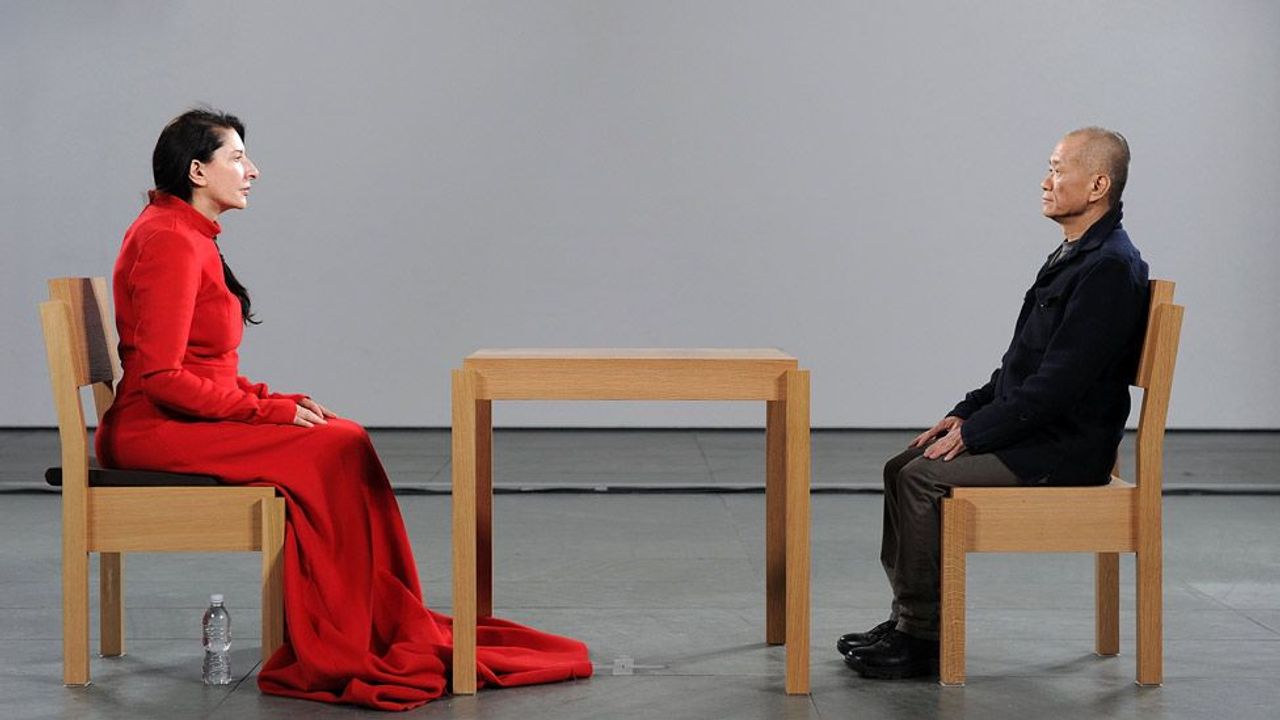
In Marina Abramović’s 2010 retrospective at MoMA, The Artist is Present, she sat silently facing visitors for over 700 hours.

Marina Abramović
The Artist is Present, 2010
MoMA
The artist sat silently facing visitors for over 700 hours

Why?

These readings are to give you a foundation for our future discussions and work with performance art. Keep in mind that these are initial overviews of the genre and future readings will include more particulars and deeper dives into specific artists.

Performance has long been a part of visual art practices and it is difficult to extract it from experimental theater (Hugo Ball, Spalding Gray), film (Howardena Pindell, Martha Rosler), and music (Laurie Anderson, John Cage) as well as hybrid work with the plastic arts (Anne Hamilton, Senga Nengudi), since all may involve performance. Therefore, there will be overlap between performance and a number of other fields which opens up exciting possibilities. Even if you don’t work in performance art in your own practice, consider how it might play a role for you outside of just being an assignment or exercise.

To understand performance art, you actually have to see performance art. Since finding active, live performance art in Provo is unlikely, our fallback option is to watch videos of seminal performance art pieces. To really experience the performance art, you need to give yourself to it. It can be difficult since some of it is slow and difficult. Do not fast forward. Do not get distracted. Glue yourself to the screen and focus on what is happening, the gestures, the framing/angles, the artists’ choices, the pacing, all of it.

Note: Due to the nature of performance art being an exploration of the body, some material below may be inappropriate for sensitive individuals. If you have concerns, please contact the instructor and they can guide you to material that will be suitable for you.

Required

The Case for Performance Art, The Art Assignment

“Dubious of performance art? Break into a cold sweat when you realize it’s about to begin? There’s a reason. Here we present you with a brief history of performance art and attempt to sway you to its potential charms. Let us know if you buy it.”

Some Thoughts On Teaching Performance Art in Five Parts, Total Art Journal

This is an abridged version. “In the classic understanding of the medium, performance art is the act of doing. It is not representing, not recounting, not re-enacting, but simply doing. It is live and it is real. It is direct action. It is not about rehearsing a text or recreating a narrative, but rather it is an experiment with a portion of one’s life. It is not about entertainment, but about the desire to learn. Ideally, performance artists are always generating new challenges for themselves, never repeating an action. Performance is driven by curiosity, and the quest is discovery, transformation, knowledge.”

Full, unabridged paper is here.

Semiotics of the Kitchen

Semiotics of the Kitchen adopts the form of a parodic cooking demonstration in which, Rosler states, ‘An anti-Julia Child replaces the domesticated “meaning” of tools with a lexicon of rage and frustration.’ In this performance-based work, a static camera is focused on a woman in a kitchen. On a counter before her are a variety of utensils, each of which she picks up, names and proceeds to demonstrate, but with gestures that depart from the normal uses of the tool. In an ironic grammatology of sound and gesture, the woman and her implements enter and transgress the familiar system of everyday kitchen meanings—the securely understood signs of domestic industry and food production erupt into anger and violence. In this alphabet of kitchen implements, states Rosler, ‘when the woman speaks, she names her own oppression.’”

Selected Works

Includes the following documented performances:

  • Fall 1, 1970 (Los Angeles)
  • Fall II, 1970 (Amsterdam)
  • I'm Too Sad To Tell You, 1971
  • Broken Fall, 1971 (Geometric) (West Kapelle, Holland)
  • Broken Fall, 1971 (Organic) (Amsterdamse Bos, Holland)
  • Nightfall, 1971
Roadworks (clip)

“A lively street scene in the London borough of Brixton in the mid-1980s: people hurry along the busy streets carrying full shopping bags as they pass shabby shops and stalls. Amid all this is a young woman dressed in black walks barefoot along the dingy sidewalk. Tied to her ankles is a pair of black Dr. Martens boots, which she drags behind her, step by step. Very few people notice the young woman; some stop in amazement, shaking their heads or making fun of her display. The action, in fact, is a performance by Mona Hatoum, which the artist staged as part of an exhibition project at the Brixton Art Gallery and which she documented on video. A working-class, residential area in south London, Brixton is characterized by its multicultural population. In the 1980s, there was racist police violence against its Black residents, which led to a riot. In her performance, Mona Hatoum refers to these political events: the Dr. Martens, which she dragged through the neighborhood’s streets, were traditionally worn by the British police. Like a dark shadow, the boots seem to follow the barefoot artist, who seems naked and vulnerable. The black, lace-up Dr. Martens boots were not only part of police officers’ uniforms but were also worn by punks and skinheads. In the context of this performance, the shoes embody a system of control, violence, and oppression against which the individual is defenseless. In her video film Roadworks, Hatoum has condensed the 30-minute plus eponymous performance into a 6’45” cinematic collage that primarily focuses on the audience’s reaction.”

Paradox of Praxis 1: Sometimes Making Something Leads to Nothing

Mexico City, Mexico, 1997

Supplementary Readings

Performance Art
Performance Art and Documentation
Marina Abramović
Laurie Anderson
The Sensual Nature of Sound: 4 Composers: Laurie Anderson, Tania Leon, Meredith Monk, Pauline Oliveros
The Sensual Nature of Sound portrays these New York based composer/performers in terms of their musical lives. Although all four women are pioneers in American music, each composer pursues a distinct direction of her own. Since the early 1980s, Laurie Anderson has used music and performance as the foundation for her multi-media stage shows which have since become her trademark. Cuban born Tania Leon composes orchestral music that is an intricate weave of Afro-Cuban and Latin jazz elements embedded within a classical Western concerto format. Meredith Monk experiments with new ideas in music theater and has developed a genre of opera very much her own. Pauline Oliveros draws upon the rich resources of ritual, myth, meditation, and improvisation to create a body of work that is truly visionary. Filmed at rehearsals and performances in the United States and abroad, The Sensual Nature of Sound examines the contributions of these diverse composers to contemporary American music.”
Joseph Beuys
Chris Burden
Fluxus and Performance
Guillermo Gomez-Peña
Allan Kaprow and Happenings
Tehching Hsieh
Senga Nengudi
Yoko Ono
Martha Wilson

Response Question

Remember to cite specific instances from the “readings” to support your views.

  • What excites you about the prospect of doing performance art? What gives you pause?
  • How might things we have discussed up to this point in the semester inform your approach to performance art?
  • Where do you stand on the idea of documentation in performance art—is it a necessary evil, necessary good, unnecessary evil, or just plain unnecessary?

2.2: Audio Glossary + Tutorials

Read by Thu Sep 11, 8am
Reading Response due Thu Sep 11, 8am
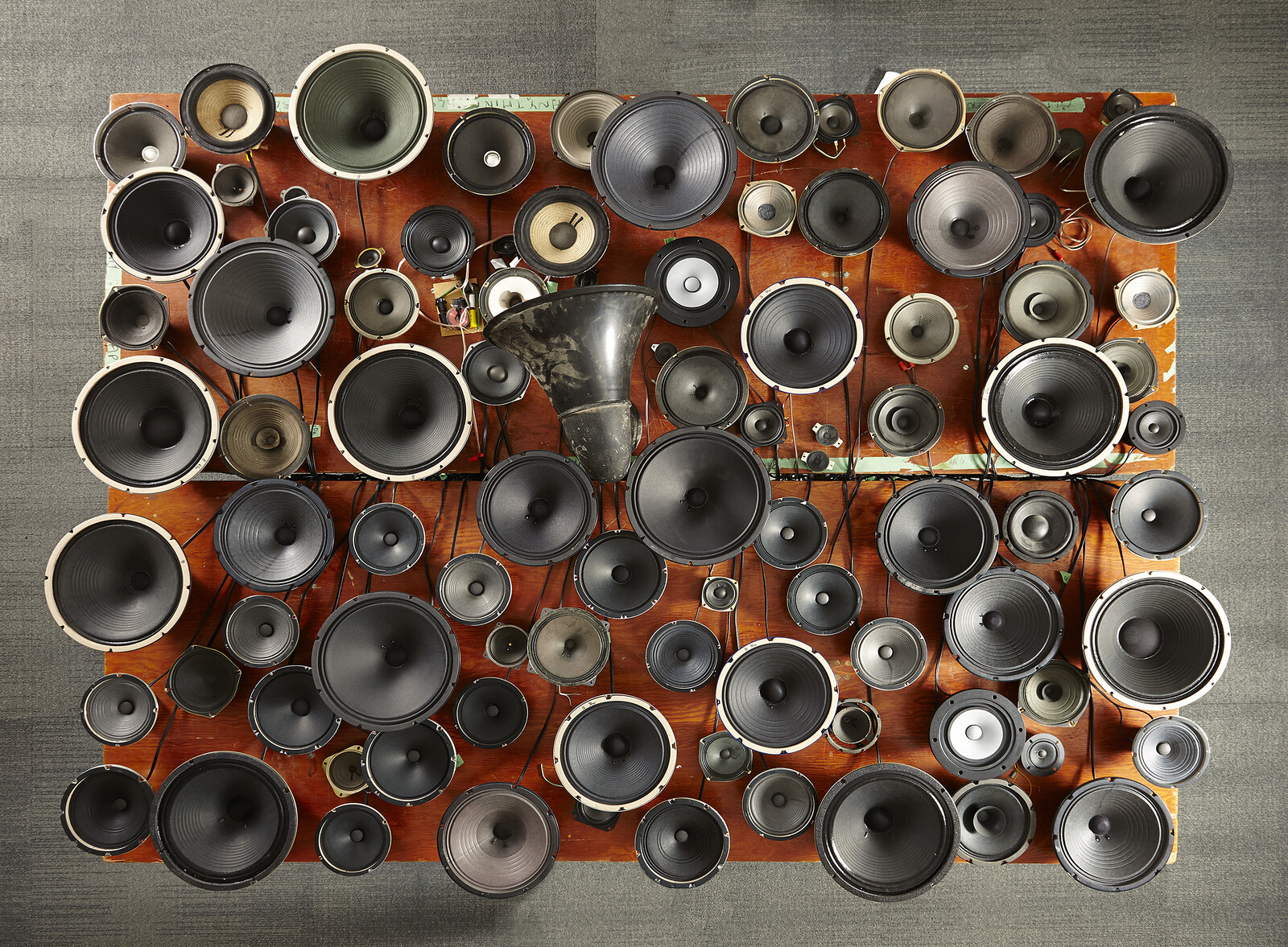
Janet Cardiff and George Bures Miller, Experiment in F# Minor, 2013

Janet Cardiff and George Bures Miller
Experiment in F# Minor, 2013

Why?

To better understand how a medium functions and how it is used can help you determine how you might approach it and discover new ways to interact with it. In the case of sound, understanding terminology and learning about things like amplitudes, wave forms, and more will help you as you take tutorials because you will understand the jargon used by those in the field.

We won’t be going into too much depth with specific tutorials since experimentation and self-directed study based on individual project needs can be more fruitful. There are tutorials below to get you started, but there is still much that can be learned as you figure out your specific needs. We will introduce you to Audacity since it is a robust, open-source, free software that you can download to you own computers if needed. There are supplementary readings on Audacity which is an Adobe product that is a bit more advanced.

Required

Audio Glossary
This glossary of terms should help you understand some of the jargon used in the field of audio and audio recording.
Analogue Audio Tape Editing
“Editing and splicing analogue audio tape using a vintage Revox reel-to-reel tape deck.”
How to Use Audacity to Record & Edit Audio | Beginners Tutorial
“In this step-by-step tutorial, learn how to record and edit audio using Audacity. Audacity is free and open source and works across platforms, including Windows, Mac, and Linux.”
What are Audio Effects? Sound Basics with Stella – Episode 1
“What is reverb? What is delay? How about overdrive, fuzz or distortion? Watch audio engineer Stella Gotshtein guide you through the evolution of sound effects in music production.”
EQ Explained – Sound Basics with Stella Episode 2
“What is EQ? When and why do we use it? How can it change the sound of a single instrument or a full mix? Watch audio engineer Stella Gotshtein explain the importance of EQ in audio mixing.”
Reverb and Delay Explained – Sound Basics with Stella Episode 4
“Reverb and delay both create echo effects and are often used in recording and mixing. Watch audio engineer Stella Gotshtein demonstrate them on vocals and drum loops.”

Supplementary Readings

Audacity
Audacity Tutorials, LinkedIn Learning
Once you have logged in using your Provo City Library credentials, then you can click here, or do you own search for “Audacity.”
Adobe Audition
Learn Audition, Adobe
This series of relatively short video tutorials covers how to use Adobe's Audition, a professional tool for precision audio editing, mixing, and sound effects.
Learn How to Use Adobe Audition in 8 Minutes!
“This was a quick tutorial on how to get started with Adobe Audition.”
Adobe Audition Tutorials, LinkedIn Learning
Once you have logged in using your Provo City Library credentials, then you can click here, or do you own search for “Adobe Audition.”
Multi-channel Audio Editing
Multi-channel Audio Installation Guide

Collin Bradford wrote this guide specifically for BYU students using the equipment available through tech checkout. “How to use the MOTU UltraLite AVB audio interface with your software (Adobe Audition or Max/MSP) to control spatialization of sound in sound installations.”

Response Question

Remember to cite specific instances from the “readings” to support your views.

  • What are the most helpful things that you learned, and how might you use this in your own sound art projects?

2.1: New Genres and Sound Art

Read by Tue Sep 09, 8am
Reading Response due Thu Sep 11, 8am
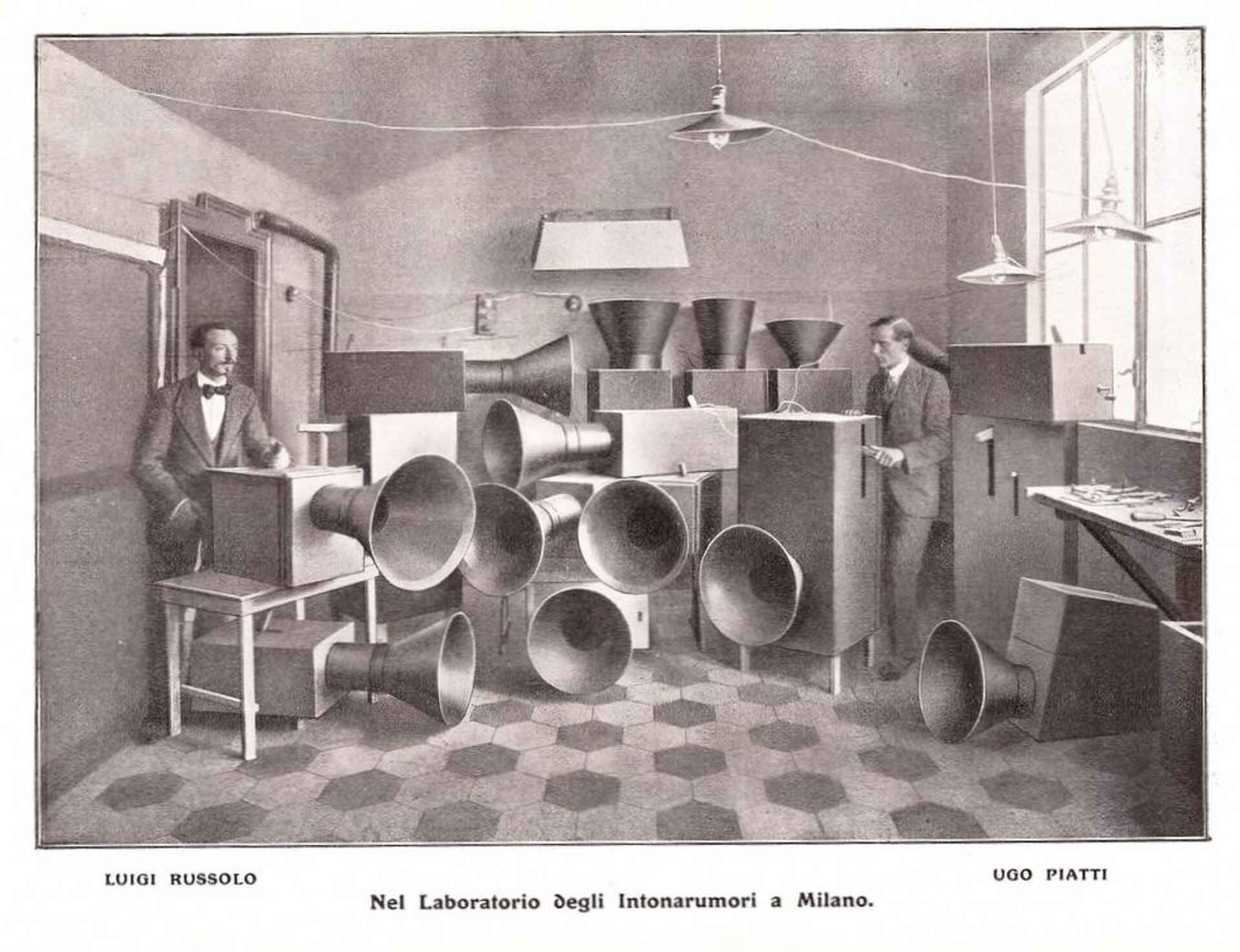
Noise Instruments by Luigi Russolo for brutalist music, 1913

Noise Instruments by Luigi Russolo for brutalist music, 1913.

Why?

New Genres is a tricky category in which to place art, and its even trickier when we consider the disciplines and type of work that is placed within that category. Sound within art (apart from music and theatre) has been a fixture since the early twentieth century. Performance art is either over one hundred years old or over fifty years old, depending on what you count. Video art has existed for almost sixty years. Installation art has existed for over a century. None of these are particularly “new” except in relation to thousands of years of cultural production. What is important to focus on is not necessarily the associated mediums, but the impetus and ethos that is associated with newer art. The Calvino text in the readings below is meant to address the desire to create something new, to copy things that are new, and to refine and explore the things that are made.

We are starting our foray into new genres with sound. This is partly because it is not typically focused on in standard art education, therefore opens up a lot of possibilities without prejudice.

Required

A Sign in Space, Cosmicomics
“The fact that the galaxy slowly revolves is the premise of a story about a being desperate to leave behind some unique sign of its existence. This story is a direct illustration of one of the tenets of postmodern theory—that the sign is not the thing it signifies, nor can one claim to fully or properly describe a thing or an idea with a word or other symbol.”1

  1. “Cosmicomics,” Wikipedia, last updated January 10, 2025, accessed August 20, 2025, https://www.wikiwand.com/en/articles/Cosmicomics.
A Brief History of Sound Art, Barnes Foundation
“Philosopher Christoph Cox traces the history of sound art from the invention of audio recording in the late 19th century to the genre-bending compositions of John Cage to the explosion of sound installation in the 1960s. Cox surveys a range of sonic practices, revealing how they resemble and resist approaches in the visual arts.”

Supplementary Readings

New Genres
Introduction, Mapping the Terrain: New Genre Public Art
“For the past three or so decades visual artists of varying backgrounds and perspectives have been working in a manner that resembles political and social activity but is distinguished by its aesthetic sensibility. Dealing with some of the most profound issues of our time—toxic waste, race relations, homelessness, aging, gang warfare, and cultural identity—a group of visual artists has developed distinct models for an art whose public strategies of engagement are an important part of its aesthetic language. The source of these artworks’ structure is not exclusively visual or political information, but rather an internal necessity perceived by the artist in collaboration with his or her audience. We might describe this as ‘new genre public art,’ to distinguish it in both form and intention from what has been called ‘public art’—a term used for the past twenty-five years to describe sculpture and installations sited in public places. ”
Transgressing Boundaries (Even Those Marked Out by the Predecessors) in New Genre Conceptual Art, Art After Conceptual Art
“Tracing the difficulties that prevsous gencrations of Conceptual art coming from behind the Iron Curtain faced while seeking broader recognition, we can acknowledge that any art with latent or explicit political connotations was not readily accepted by Conceptual art in general (that is, by the North American canon of hard-core Conceptualism).”
History of Sound Art
History of Sound Art: Audio

“An engaging sound collage presenting an unique historical documentation of a century of Sound Art from the early 20th century to 20011.

“The composition weaves through different sound works throughout the century with narratives and ideas from some of the prominent artists in the field. A retrospective into the craft of sound and its development as an artistic practice, from Edison’s first sound film in 1895 to today, including the thoughts and concepts which served the basis for the creation of these works as spoken by the artists themselves.​

T“he ‘Listening’ can be accompanied with the booklet available here that informs of the artists whose work and words are heard according to the timecode on the video.

“Commissioned by Newtoy Ltd in 2011. Created by J Milo Taylor. Mixed by Joel Cahen

“Featuring:
Sleep Research Facility, Cathy Lane, John Cage, Charlie Fox, Ros Bandt, Janet Cardiff, Brandon La Belle, Thomas Edison, Marcel Duschamp, Hugo Ball, Leon Theramin, FW Marinetti, Walter Ruttmann, Kurt Schwitters, Harry Partch, Antonin Artaud, Pierre Schaeffer and Pierre Henry, Iannis Xenakis, Louis and Bebe Barron, Pauline Oliveros, Morton Feldman, George Brecht, Richard Maxfield, Dick Higgins, Group Ongaku, Brion Gysin, Karlheinz Stockhausen, Tod Dockstader, La Monte Young, Luc Ferrari, Alvin Lucier, Bruce Nauman, Bernard Parmegiani, Francoise Bayle, R Murray Schafer, Trevor Wishart, hildegard Westerkamp, Terry Fox, David Dunn, Nam June Paik, Max Neuhaus, Throbbing Gristle, Barry Truax, Limpe Fuchs, John Oswald, Bill Fontana, Warren Burt, David Cunningham, Laurie Anderson, Gregory Whitehead, Lee Renaldo, Christian Marclay, William Burroughs, Denis Smalley, Dan Lander, Gilles Gobeil, Negativland, Trimpin, Jonty Harrison, Kim Cascone, Jodi Rose, Francisco Lopez, Bernard Leitner, Peter Vogel, Steve Roden, Pamela Z, Terre Thaemlitz, Chris Watson, David Toop, Disinformation, Atau tanaka, Dan Lander, Philip Jeck, Carsten Nicolai, Justin Bennett, David Toop, Project Dark, Steve Vitiello, Maryanne Amacher, Christina Kubisch, John Bischoff, Andres Bosshard, Iris Garrelfs, Peter Cusack, Steve Barsotti, Andrea Polli, James Webb, Nic Collins, DJ Spooky, Rainer Linz, Salomé Voegelin, David Lee Myers, David Chesworth and Sonia Leiber, Karlheinz Essl, Dallas Simpson, FM3, Matthew Mullane, Ultra-Red, Tony Herrington, Dan Senn, John Wynne and Susan Philipsz.”

History of Sound Art: Timeline
This timeline accompanies J. Milo Taylor's “engaging sound collage presenting an unique historical documentation of a century of Sound Art from the early 20th century to 2011." You can also see the entire timeline as a scrollable, single-page PDF: https://www.dropbox.com/scl/fi/dkbnw9ej90kltp0kl51j2/taylor_history-of-sound-art-vertical.pdf?rlkey=t60n33yn5nkts7eds0130ql96&st=mbibe8xa&dl=0
A Brief History of Sound Art, Berman Museum of Art
“Can sound be an artistic medium? Absolutely! This video details the history of sound art--when the term became popularized and the historical precedent for this contemporary mode of art making.”
Sound Artists
Sound Artists: A List
This is a spreadsheet listing sound artists along with links to help with further research.
Pauline Oliveros
The Sensual Nature of Sound: 4 Composers: Laurie Anderson, Tania Leon, Meredith Monk, Pauline Oliveros
The Sensual Nature of Sound portrays these New York based composer/performers in terms of their musical lives. Although all four women are pioneers in American music, each composer pursues a distinct direction of her own. Since the early 1980s, Laurie Anderson has used music and performance as the foundation for her multi-media stage shows which have since become her trademark. Cuban born Tania Leon composes orchestral music that is an intricate weave of Afro-Cuban and Latin jazz elements embedded within a classical Western concerto format. Meredith Monk experiments with new ideas in music theater and has developed a genre of opera very much her own. Pauline Oliveros draws upon the rich resources of ritual, myth, meditation, and improvisation to create a body of work that is truly visionary. Filmed at rehearsals and performances in the United States and abroad, The Sensual Nature of Sound examines the contributions of these diverse composers to contemporary American music.”
Pauline Oliveros, Sonosphere
“This episode of Sonosphere takes a look at the life and work of composer Pauline Oliveros through the eyes and ears of those who worked with her and learned from her. We spoke with Claire Chase, Wu Fei, Monique Buzzarte, Tara Rodgers, and Kerry O'Brien about how Pauline touched their lives personally and professionally, and how her legacy shaped the musical world of today.”
KQED Spark: Pauline Oliveros, KQED
“Spark makes acquaintance with Pauline Oliveros, the internationally renowned pioneer in electronic and improvisational music. Original air date: February 2004.”
The Difference Between Hearing and Listening | Pauline Oliveros | TEDxIndianapolis, TEDx Talks
“Sounds carry intelligence. If you are too narrow in your awareness of sounds, you are likely to be disconnected from your environment. Ears do not listen to sounds; the brain does. Listening is a lifetime practice that depends on accumulated experiences with sound; it can be focused to detail or open to the entire field of sound. Octogenarian composer and sound art pioneer Pauline Oliveros describes the sound experiment that led her to found an institute related to Deep Listening, and develop it as a theory relevant to music, psychology, and our collective quality of life. Pauline is a composer and accordionist who significantly contributed to the development of electronic music. The culmination of her life-long fascination with music and sound is what inspired the practice of Deep Listening, the art of listening and responding to environmental conditions. As a Professor of Practice in the Arts Department at Rensselaer Polytechnic Institute, she produced highly regarded work as a composer and improviser. Pauline’s 1989 recording, Deep Listening, is considered a classic in her field.”
Pauline Oliveros on The Power of Listening | Red Bull Music Academy, Red Bull Music Academy
“Pioneering artist Pauline Oliveros recalled how she created her own instruments and how listening can help change how you hear in her 2016 Red Bull Music Academy lecture.”
Listening
Pauline Oliveros, Sonosphere
“This episode of Sonosphere takes a look at the life and work of composer Pauline Oliveros through the eyes and ears of those who worked with her and learned from her. We spoke with Claire Chase, Wu Fei, Monique Buzzarte, Tara Rodgers, and Kerry O'Brien about how Pauline touched their lives personally and professionally, and how her legacy shaped the musical world of today.”
The Difference Between Hearing and Listening | Pauline Oliveros | TEDxIndianapolis, TEDx Talks
“Sounds carry intelligence. If you are too narrow in your awareness of sounds, you are likely to be disconnected from your environment. Ears do not listen to sounds; the brain does. Listening is a lifetime practice that depends on accumulated experiences with sound; it can be focused to detail or open to the entire field of sound. Octogenarian composer and sound art pioneer Pauline Oliveros describes the sound experiment that led her to found an institute related to Deep Listening, and develop it as a theory relevant to music, psychology, and our collective quality of life. Pauline is a composer and accordionist who significantly contributed to the development of electronic music. The culmination of her life-long fascination with music and sound is what inspired the practice of Deep Listening, the art of listening and responding to environmental conditions. As a Professor of Practice in the Arts Department at Rensselaer Polytechnic Institute, she produced highly regarded work as a composer and improviser. Pauline’s 1989 recording, Deep Listening, is considered a classic in her field.”
Pauline Oliveros on The Power of Listening | Red Bull Music Academy, Red Bull Music Academy
“Pioneering artist Pauline Oliveros recalled how she created her own instruments and how listening can help change how you hear in her 2016 Red Bull Music Academy lecture.”

Response Questions

Remember to cite specific instances from the text to support your views.

  • What are the pros and cons of the drive to explore the “new?”
  • Which artists/projects mentioned resonated with you and why?
  • What excites you about or causes you to hesitate when it comes to making your own sound art given what was mentioned in the readings?